
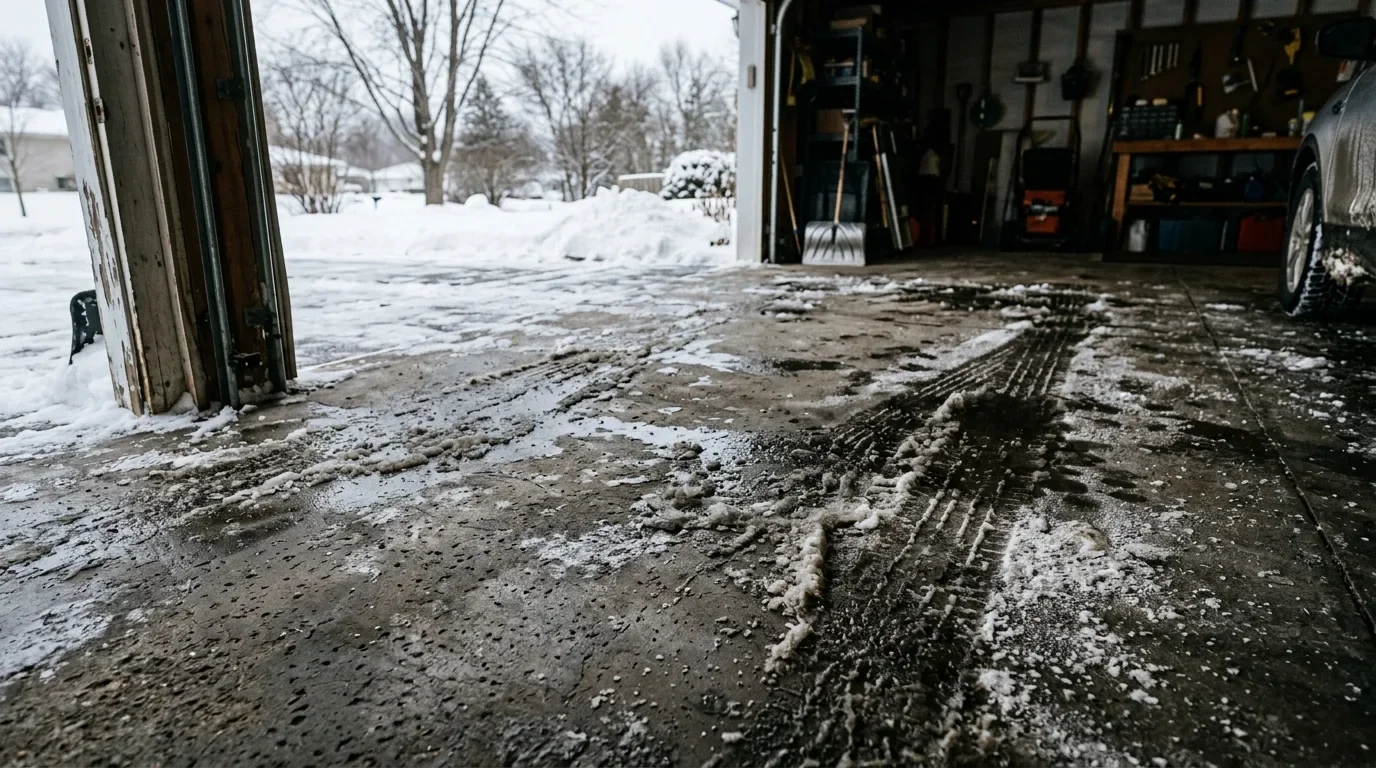
Not every crack is the same
Epoxy can cover a stable crack that has stopped moving. It will not stop a moving crack from showing through.
Concrete cracks for several reasons: drying shrinkage, thermal contraction and expansion, settlement, inadequate control joints, and overload.[1] Some of those causes happen once and are done. Others keep going.
Before you pick a repair, find out whether the crack is moving, and whether that movement can be stopped.[3]
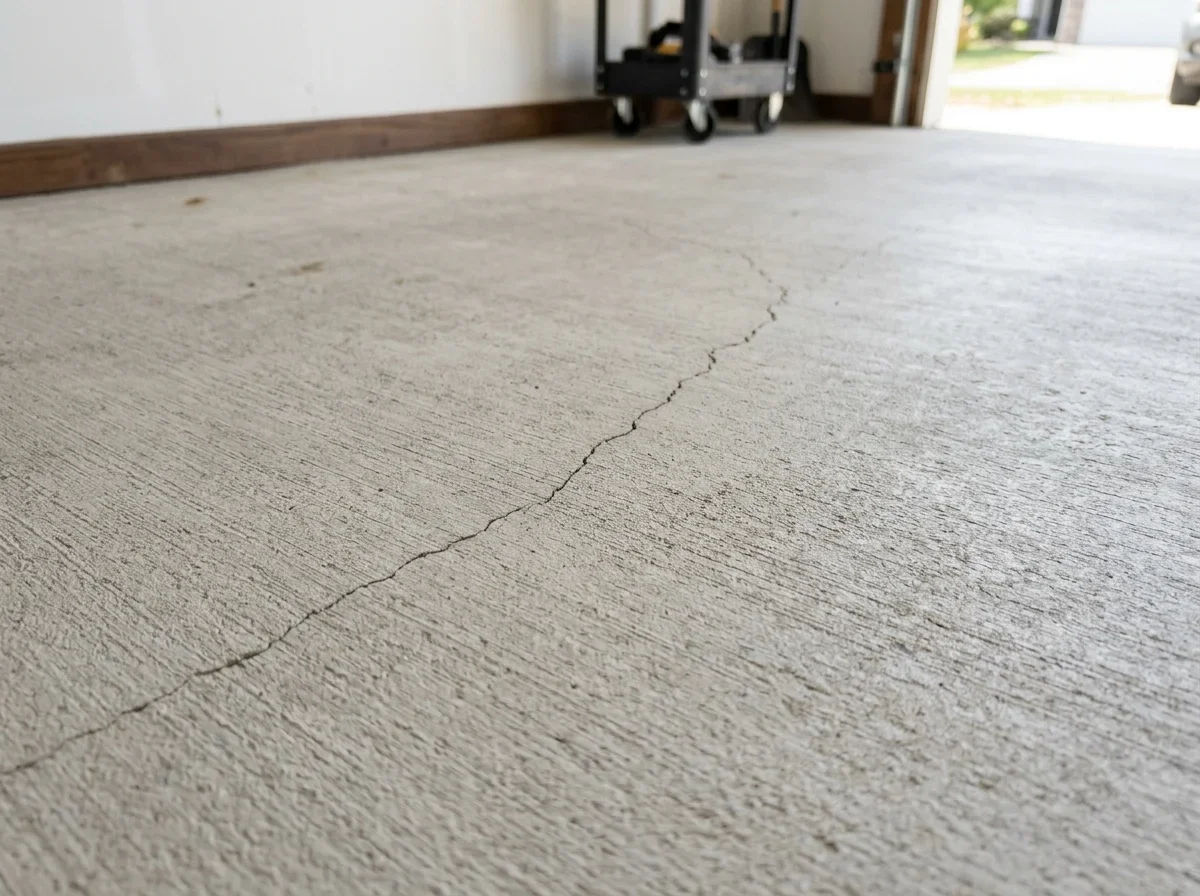
Here is a quick sort of what to expect under a rigid coating:
| Crack type | General treatment category | Likely outcome under rigid epoxy |
|---|---|---|
| Stable shrinkage or hairline crack | Clean, fill with a compatible rigid filler, grind flush | Often stays hidden |
| Control joint | Keep its relief function with a flexible joint treatment | May show as a line or reopen |
| Random crack that opens and closes | Treat as a movement problem first; use a repair that accounts for movement | May telegraph or reappear |
| Offset or heave (one side higher) | Find and address the cause in the slab first | Will likely reappear |
You can often spot a working crack without tools. Look for a crack that looks different from one season to the next, a height difference across it, or a line that follows a joint.
Control joints versus random cracks
Control joints are cuts placed in a slab on purpose. They control natural cracking, divide the slab into sections, and accommodate movement.[2]
That is where a common mistake happens. A joint gets packed with rigid filler and coated over in one continuous film, as if it were just another crack. The slab still wants to move along that line, and the rigid film has little ability to stretch, so the joint tends to show again.
A random crack is different. It formed where the slab was stressed, not where someone planned for it. Whether it is stable or working decides how to treat it.
Before you hire anyone, ask whether they will honor the joints through the coating or coat straight across them.
Filling cracks before coating
Good prep is the part that most surface-level patching skips. Loose material and weak edges need to come out, and the crack needs to be clean before anything goes in.
Filler types fall into a few general groups:
- Epoxy putty or paste, a rigid filler for small, stable cracks
- Low-viscosity crack-fill or injection epoxy, intended to bond separated sections of concrete together[5]
- Flexible or semi-rigid joint fillers, used where some movement is expected
Which one fits depends on the crack. The manufacturer's technical data sheet is the controlling document for product limits and flexibility, so ask any contractor to show it to you. That sheet also covers cure time and recoat timing, which vary by product.
Thin, runny products can drain out of a crack that goes all the way through the slab, so follow the data sheet rather than guessing.
Once the fill is cured, it gets ground flush, and then the floor is prepped for coating.
How it works
Preparing a stable crack for coating
Step 1: Remove loose material
Weak edges come out first
Step 2: Clean the crack
Step 3: Fill with a compatible filler
Check the data sheet
Step 4: Grind flush after cure
Step 5: Prep the floor for coating
If you're unsure whether your slab is ready, the floor risk assessment is a useful first check, and floor prep and repair covers what that work involves. Spalled or crumbling areas should be repaired first, as covered in spalling and flaking garage floor concrete.
Why moving cracks reappear
Epoxy injection can repair non-working cracks. But repairing a working crack with epoxy may cause another crack to form as stress is relieved somewhere else.[2]
Epoxy repair may not be applicable at all when a crack is subject to later movement.[1]
Think of it as gluing two pieces of a board together while someone keeps pulling them apart. The glue line may be stronger than the board, so the board breaks next to it.
Pro tip
Watch a crack across more than one season before calling it static. A crack that changes with the weather is a working crack.
Where considerable movement makes a crack behave like a joint, it should not be filled with epoxy adhesive. The cause of the cracking should be addressed to prevent a repeat.[4]
A coating can improve appearance, seal the surface, and help limit water entry. It cannot make a moving slab hold still.
Slab settlement and frost movement
Settlement, heave, and ongoing movement are not cosmetic problems. A crack that looks minor on the surface can be a sign of something happening in the soil or at the foundation.[1]
In a cold climate like Wisconsin's, frost is a common suspect: water in the ground can freeze, expand and lift a slab unevenly.
Watch a crack across more than one season before deciding it is static, and check the coating maker's data sheet for temperature limits on installation.
If a crack is widening, has vertical displacement, or comes with settlement or wall symptoms, find the cause before putting a decorative coating on top. A concrete or foundation professional can evaluate that.
How serious is it
Level 1 of 3: Stable
Signs Hairline or shrinkage crack that does not change
What to do Clean, fill, grind flush, then coat
Level 2 of 3: Working
Signs Crack that opens and closes or follows a joint
What to do Use a repair that accounts for movement
Level 3 of 3: Serious
Signs Widening crack, height difference, or wall symptoms
What to do Find the cause first and call a professional
Setting expectations with a contractor
A good installer will tell you what a coating can and cannot do. Ask these questions before signing anything:
- Do you treat each crack as static or moving, and how do you decide?
- What do you do at control joints?
- Will cracks still be visible afterward, and is that in writing?
- What does the warranty exclude, such as new cracking or slab movement?
- Can I see the technical data sheet for the filler and the coating?
Coating choice matters here too. Our guide to the best epoxy for garage floors compares options, and a more movement-tolerant system may lower the risk, though it cannot correct slab movement or poor prep.[5]
If you're ready to talk to installers, garage floor epoxy services are a place to start, and the epoxy garage floor cost page explains what drives quotes. If the old coating has already failed, see peeling epoxy garage floors.
Treat epoxy over a cracked slab as a cosmetic improvement with some risk, not a guarantee.
Key takeaways
- Epoxy works over stable, properly filled cracks
- Moving cracks and joints tend to show through a rigid film
- Fix the cause of any settlement or heave first
- Ask to see the technical data sheet and get exclusions in writing
FAQ
Can you put epoxy coating over cracked concrete?
Yes, if the cracks are stable and properly cleaned, filled, and ground flush first. A coating will not stop a moving crack, and a rigid film can show it again later.
What is the best concrete repair for garage floor cracks?
It depends on the crack. Stable cracks can take a compatible rigid filler, while moving cracks and joints need an approach that accounts for movement.[5]
What epoxy can be used to fill cracks in concrete?
Epoxy putty and low-viscosity crack-fill or injection epoxies are common. Structural epoxy is meant to bond separated concrete together,[5] so confirm on the data sheet that the product suits your crack.
What surfaces will epoxy not stick to?
Epoxy needs a clean, properly prepped surface. Loose, crumbling, or contaminated concrete is a poor base, so repair spalls and remove weak material first.
Use our free tools to estimate costs and check if your floor is ready for a coating.
Frequently Asked Questions
- American Concrete Institute. "Structural Crack Repair by Epoxy Injection." https://www.concrete.org/Portals/0/Files/PDF/Webinars/rap1.pdf. Accessed October 17, 2026.
- Federal Highway Administration. "HMEC Module G Lesson 07." https://www.fhwa.dot.gov/pavement/materials/hmec/pubs/module_g/lesson07_wbt.pdf. Accessed October 17, 2026.
- International Concrete Repair Institute. "Concrete Cracks." https://www.icri.org/wp-content/uploads/2024/11/ICRI-2024-05-Thu-Flax.pdf. Accessed October 17, 2026.
- New York State Office of General Services. "Crack Repairs by Epoxy Injection." https://online2.ogs.ny.gov/dnc/masterspec04/docs/Division03Concrete/030132CrackRepairsByEpoxyInjection.doc. Accessed October 17, 2026.
- Thermal-Chem. "Crack and Joint Repairs on Industrial Concrete Floors." https://www.thermalchem.com/wp-content/uploads/2022/05/Installation-Guide-Crack-and-Joint-Repairs-on-Ind-Conc-Flrs.pdf. Accessed October 17, 2026.