
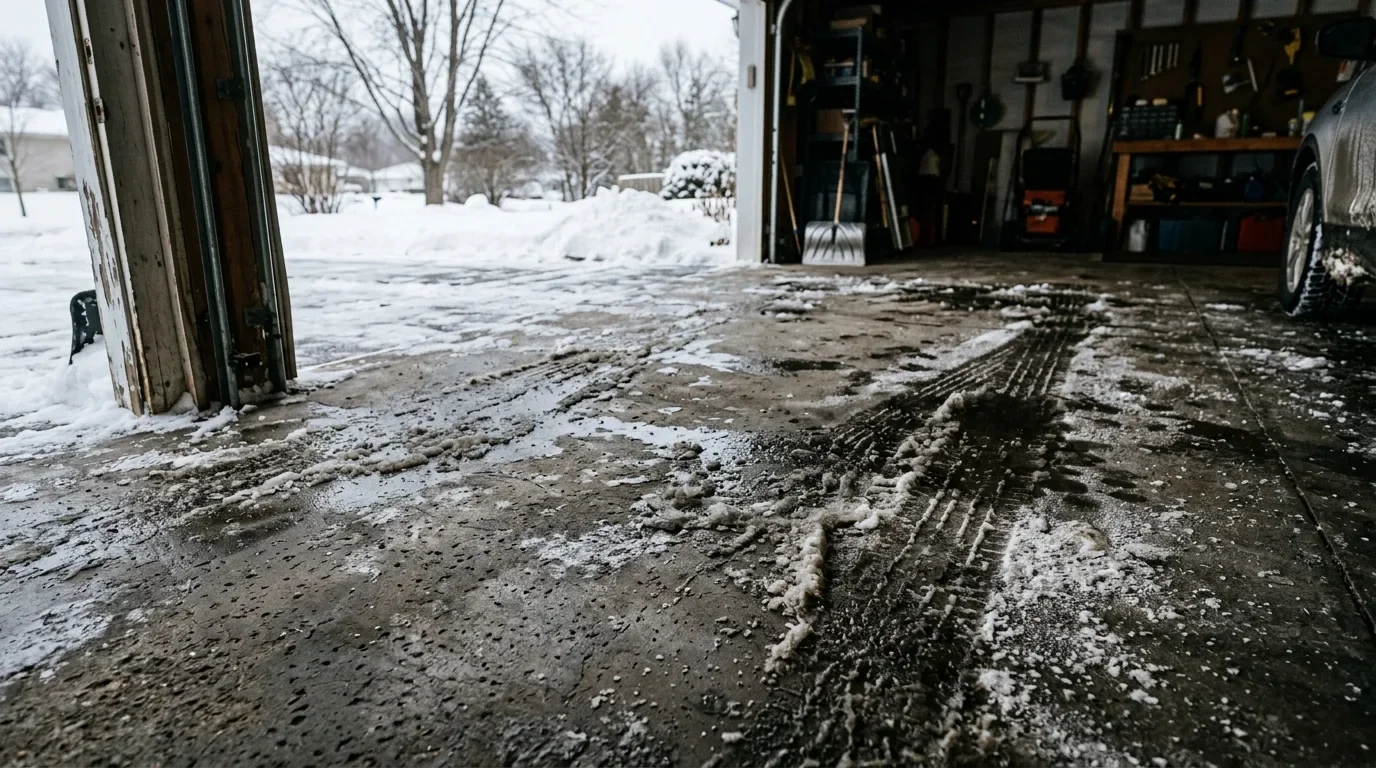
What amine blush looks and feels like
Amine blush shows up as a waxy, greasy, or cloudy film on epoxy that is curing or has just cured. Some people describe it as hazy streaks, oily swirls, or a water-marked look. The coating underneath can otherwise seem hard.
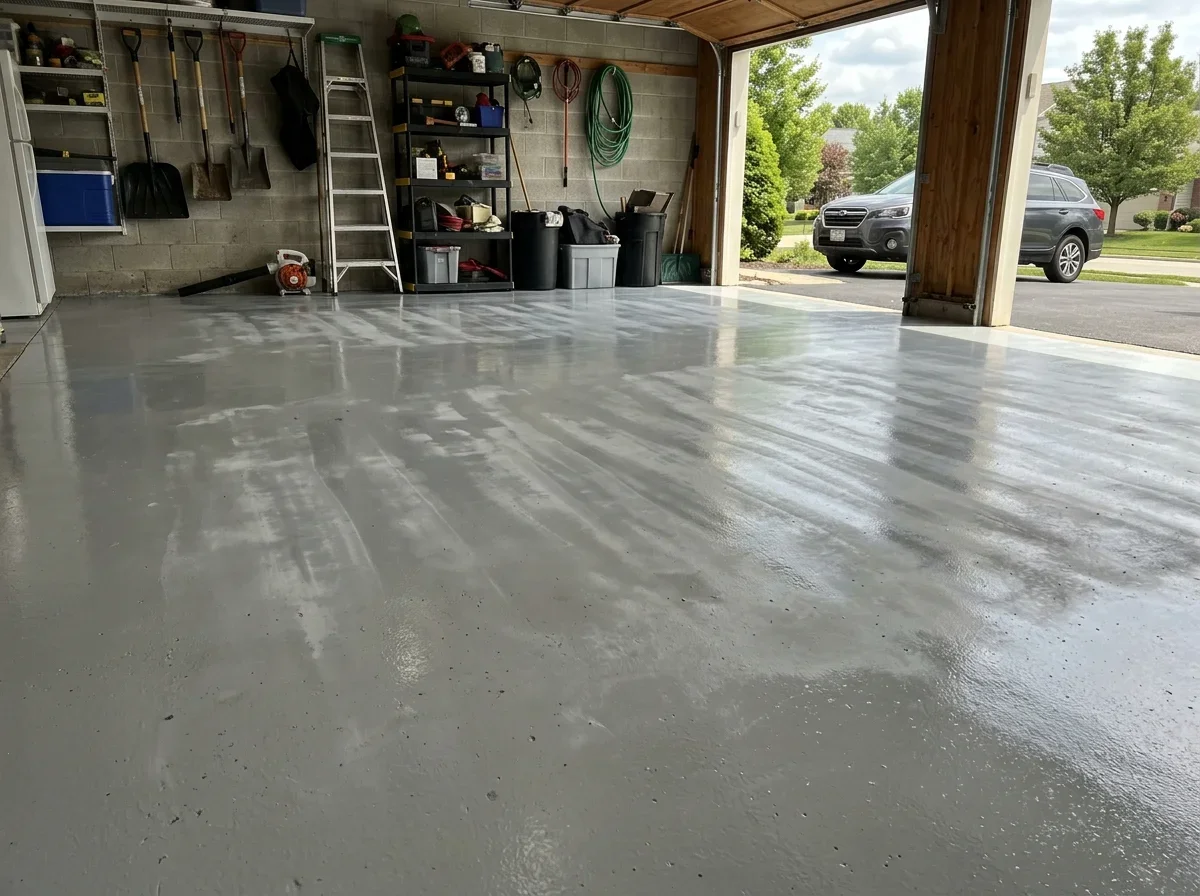
Amine blush is a surface film that can develop on amine-cured epoxy, and the American Coatings Association's technical paper on amine-functional curatives states that low temperature and high humidity increase the probability of blush forming.[1] In plain terms, the hardener can react at the surface with moisture and carbon dioxide in the air. That leaves a residue on top instead of staying locked into the coating.
How it works
How amine blush forms
Step 1: Cool, humid air reaches the curing surface
Low temperature and high humidity raise the odds
Step 2: Hardener reacts at the surface
With moisture and carbon dioxide in the air
Step 3: Residue film is left on top
Instead of staying locked into the coating
Why cool, humid garages invite it
Cool, damp conditions are the classic setup for blush.[1] Cold also slows the cure, so the wet or tacky surface sits exposed to moist air for longer. More time exposed means more chance for a film, plus dust and fingerprints.
In an unheated garage, a concrete slab can stay colder than the air above it during temperature swings. Moisture can condense on a cold surface even when the room feels fine to you.
A mild weekend can still bring cool nights and damp air. Check the forecast across the whole cure window, not just application day.
If you're weighing a cold-weather job, our guide to epoxy garage floors in winter covers slab and cure limits.
Open garage doors on a damp day let humid air straight onto the curing surface. Fuel-burning heaters that exhaust into the space add moisture and combustion gases. Your coating's data sheet states the allowed temperature and humidity range, so look up your specific product.
Pro tip
Check the forecast across the whole cure window, not just application day, and compare it with the temperature and humidity limits on your product's data sheet.
Why it matters for the next coat
The film is the real problem. It sits between the cured epoxy and whatever goes on top, and it can act as a bond-breaker. A topcoat, clear coat, or second epoxy layer applied over blush may look fine at first, then peel or delaminate later.
That's why a hazy floor isn't automatically a failure, but it is a stop sign. Recoating over it turns a surface issue into a bigger repair.
Check the maker's recoat window and surface-prep instructions first. If the floor later starts lifting, our page on a peeling epoxy garage floor explains the usual causes.
Removing blush before recoating
The usual approach is warm water and detergent, scrubbing, a thorough rinse, and complete drying. Treat that as general guidance and let your coating's data sheet set the final instructions.
Solvent wiping is also suggested in some places. But solvents can soften certain coatings or spread contamination, so use one only if the manufacturer allows it.
A cautious process looks like this:
- Test a small, out-of-the-way patch first.
- Scrub with warm water, a suitable detergent, and a clean non-contaminating abrasive pad.
- Rinse thoroughly so no residue remains.
- Let the surface dry completely.
- Abrade and vacuum up all dust only if the product system calls for it, then recoat within the maker's window.
If the film lifts and the epoxy under it is hard, blush is the likely culprit. If the coating stays soft or gummy, stop and contact the manufacturer.
Key takeaways
- Test a small patch before treating the whole floor
- Warm water, detergent, a thorough rinse, and full drying is the basic approach
- Use solvents only if the manufacturer allows it
- A soft or gummy coating means stop and call the manufacturer
A Wisconsin epoxy or concrete coating contractor can assess it in person. Ask whether they carry general liability insurance and give a written warranty. For wider repair work, see our floor prep and repair service page.
Preventing blush on the next job
Prevention comes down to controlling the cure environment.
- Read the product's data sheet for minimum surface and air temperatures, humidity limits, and recoat windows.
- Judge the slab itself, not just the room. A slab colder than the air invites condensation.
- Keep the garage closed against humid air during cure, and protect the coating from dust and water.
- Avoid unvented fuel-burning heaters. If you add heat or dehumidification, it must hold the required conditions safely and continuously.
- Measure and mix carefully, scraping the sides and bottom of the bucket and following the maker's instructions on transferring to a clean bucket.
- Check the slab and drainage for recurring damp spots before you start.
If you're still picking a system, our guide to the best epoxy for garage floors is a good starting point, and a garage floor epoxy professional can match a product to your conditions.
Sticky is not always blush
Sticky epoxy is easy to blame on blush, but several problems look alike. Blush is a film on the surface. A floor that's tacky or soft all the way through usually points to a mixing or cure issue, which cleaning won't fix.
| What you see | How it feels | What it suggests | What to do next |
|---|---|---|---|
| Hazy or cloudy gloss, oily swirls | Greasy or waxy film on a hard coating | Amine blush | Test a small patch with warm water and detergent, then follow the data sheet |
| Dull or uneven areas | Tacky or soft through the coating | Under-cure, from cold or poor mixing | Stop and contact the manufacturer; localized soft areas may need grinding and redoing |
| Fisheyes, craters, or beading | Smooth film with spots where coating pulled away | Surface contamination | Contact the manufacturer or a contractor before recoating |
| White or cloudy patches that recur in one area | Possibly damp | Moisture from the slab | Find the moisture source before any new coating |
A recurring damp spot, vapor coming through the slab, or water intrusion can mimic blush and cause future failure. Washing won't solve it.
Will tacky epoxy eventually cure?
Cold slows curing, so epoxy that's tacky only because it's cold may firm up once conditions improve. A section that was poorly mixed may never cure properly.
If a large area is soft, peeling, or contaminated, professional diamond grinding and a new compatible system may be more reliable than repeated washing. Before you commit, compare options using our epoxy garage floor cost overview.
Frequently asked questions
What is amine blush in epoxy?
It's a waxy, greasy, or cloudy surface film that can form on amine-cured epoxy as it cures, linked to the hardener reacting with moisture and carbon dioxide. Low temperature and high humidity make it more likely.[1]
Why is my epoxy floor sticky?
Possible causes include blush, a cold slab slowing the cure, poor mixing, contamination, or moisture. Test a small patch, and check whether the coating beneath feels hard or soft.
How do I tell when epoxy is fully cured?
Use the manufacturer's data sheet, which sets the cure and recoat guidance for your product. A hard feel alone doesn't prove the surface is ready for another coat.
Use our free tools to estimate costs and check if your floor is ready for a coating.
Frequently Asked Questions
- American Coatings Association. "Amine-Functional Curatives for Low Temperature Cure Epoxy Systems." https://www.paint.org/wp-content/uploads/2021/09/DEC96_Amine-Functional-Curatives.pdf. Accessed October 17, 2026.