


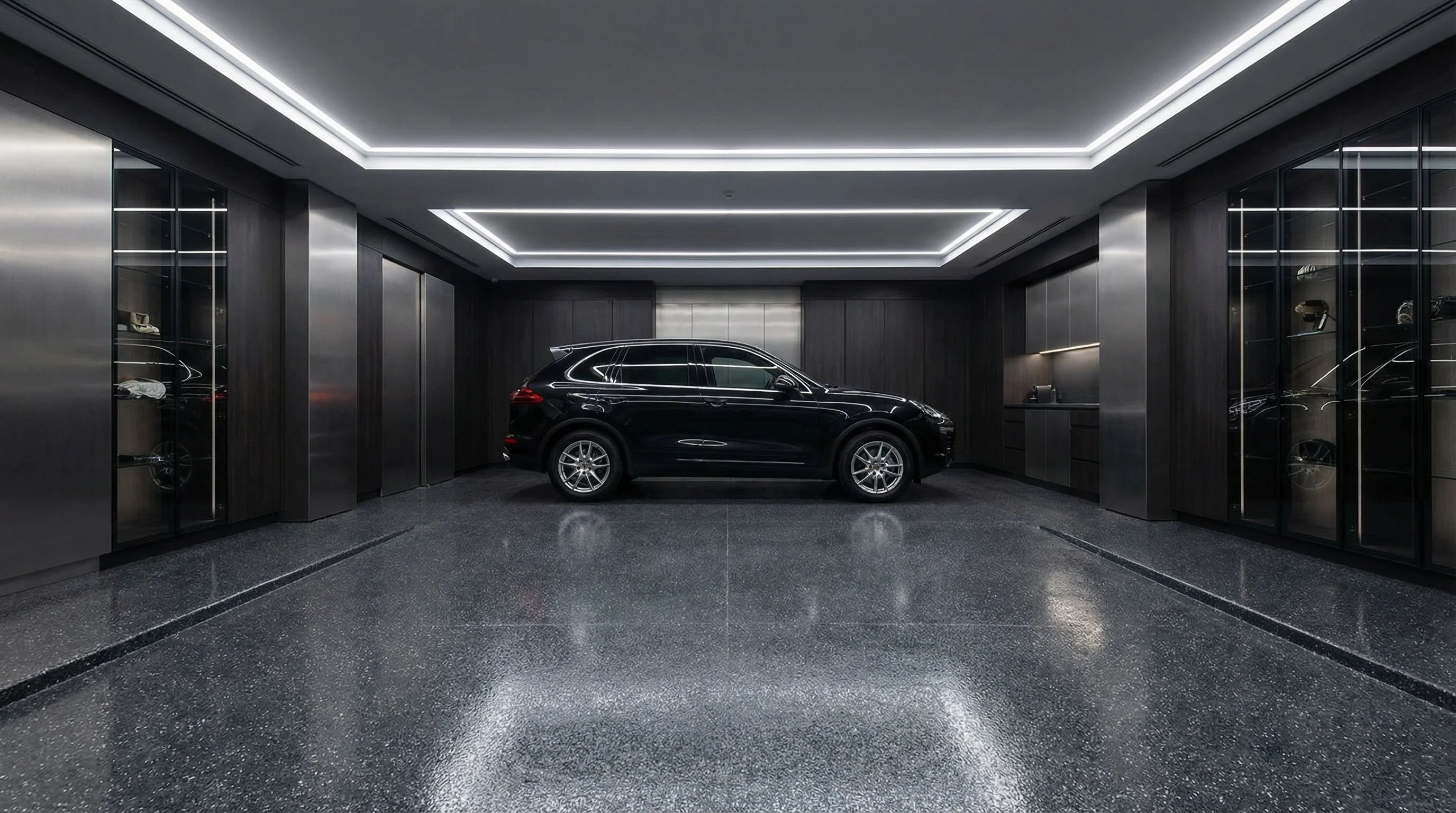
What Is Polyurea Coating?
Polyurea is a spray-applied elastomer coating that cures through a chemical reaction between isocyanate and polyol resin. Unlike epoxy, which hardens slowly through evaporation, polyurea forms a molecular bond in seconds and achieves full cure in 24 hours or less.
That technical distinction creates real-world advantages. Polyurea delivers extreme chemical resistance and tensile strength that epoxy simply can't match — which is why food processing plants in Green Bay and manufacturing facilities in Appleton specify polyurea for high-demand environments.
The material itself is 100% solids with zero VOCs. When it's sprayed onto concrete, it forms a seamless, waterproof membrane that flexes with substrate movement instead of cracking. In Fox Valley's freeze-thaw cycles, that flexibility matters.
How Polyurea Differs from Epoxy
Most property owners know epoxy. They don't always know when they've outgrown it.
Polyurea handles what breaks epoxy. Road salt, deicer chemicals, hydraulic fluid, battery acid — substances that degrade epoxy's amine bonds don't affect polyurea's urea linkages. You see this in Oshkosh commercial garages where snowplow equipment parks: epoxy shows chemical etching after two seasons, polyurea looks new after five.
| Performance Factor | Epoxy | Polyurea |
|---|---|---|
| Cure Time | 5-7 days | 12-24 hours |
| Temperature Range | 50°F - 180°F | -40°F - 300°F |
| Tensile Strength | 3,000-5,000 PSI | 12,000+ PSI |
| Chemical Resistance | Good | Excellent |
| Application Window | 50°F+ only | Works below 40°F |
| UV Stability | Yellows indoors | 98% stable |
Cure time decides downtime. An epoxy floor in a Neenah warehouse means seven days of rerouting operations. Polyurea means coating Friday night and full traffic Monday morning.
Temperature tolerance decides seasonality. Epoxy installers in Wisconsin block out November through March. Polyurea contractors work year-round because the material cures in freezing conditions.
The bottom line: If your floor sees chemicals, thermal shock, or heavy impact — or if you can't shut down for a week — polyurea is the spec.
What Does Polyurea Coating Cost in the Fox Valley?
Polyurea runs $7-$12 per square foot for residential applications and $5-$9 per square foot for commercial projects in the Appleton-Green Bay area. That's 40-60% more than epoxy, but the gap closes when you factor in longevity and lost revenue during extended curing.
A 600-square-foot residential garage costs $4,200-$7,200 fully installed. A 5,000-square-foot manufacturing floor in Menasha runs $25,000-$45,000 depending on prep requirements and performance spec.
Cost Breakdown by Application Type
| Application | Price Range (per sqft) | Typical Project Cost |
|---|---|---|
| Residential Garage | $7-$12 | $4,200-$7,200 (600 sqft) |
| Commercial Warehouse | $5-$8 | $25,000-$40,000 (5,000 sqft) |
| Food Processing Facility | $8-$12 | $40,000-$60,000 (5,000 sqft) |
| Agricultural Milking Parlor | $6-$9 | $9,000-$13,500 (1,500 sqft) |
| Auto Dealership Showroom | $9-$14 | $45,000-$70,000 (5,000 sqft) |
Food-grade and FDA-compliant polyurea systems hit the top of the range. Decorative finishes with metallic flakes or custom color blends add $1-$2 per square foot. Standard industrial gray or tan keeps costs at the lower end.
Factors That Affect Polyurea Pricing
Surface preparation drives 40% of total cost. Heavily damaged concrete in an older Kaukauna facility requires shot blasting, crack repair, and moisture mitigation before polyurea goes down. New-pour concrete just needs diamond grinding and a profile check.
Square footage creates economies of scale. A 10,000-square-foot commercial space runs $5-$6 per square foot. A 400-square-foot residential space hits $10-$12 because mobilization costs and equipment rental don't change.
Custom colors require dedicated spray equipment or thorough flushing between jobs. Standard colors from the manufacturer's palette cost nothing extra. Metallic pigments, color chips, and multi-layer systems add material and labor.
Moisture issues cost money upfront but save the job. If concrete shows moisture above 3 lbs/1000sqft in calcium chloride testing, you need moisture mitigation primers before polyurea. Skipping that test leads to delamination six months later.
| Cost Factor | Budget Impact | Why It Matters |
|---|---|---|
| Concrete Condition | $0-$3/sqft | Cracked/spalled concrete needs repair |
| Moisture Mitigation | $1-$2/sqft | Prevents delamination in damp slabs |
| Custom Colors | $1-$2/sqft | Requires dedicated equipment or flushing |
| Decorative Elements | $0.50-$3/sqft | Flakes, metallics, broadcast media |
| Square Footage | 30-40% savings at scale | Fixed costs spread over larger area |
The overnight cure advantage shows up in commercial bids. Epoxy means lost productivity, rescheduled shifts, or temporary relocation. Polyurea means coating after-hours and reopening next day. For a Green Bay distribution center moving $50,000 in product daily, the coating premium disappears against seven days of operational disruption.
The Polyurea Application Process
Polyurea goes from raw concrete to full traffic-ready in 24 hours through a controlled chemical reaction. The speed demands precision — there's no reworking wet material that gels in 10 seconds.
Surface Preparation Requirements
Diamond grinding or shot blasting opens the concrete profile to ICRI CSP 2-3 — rough enough for mechanical bond but not so aggressive that you create pinholes. Contractors in Oshkosh industrial facilities typically shot blast to remove contamination and create uniform texture in one pass.
Moisture testing is non-negotiable. Calcium chloride tests measure vapor transmission. If concrete emits more than 3 pounds of moisture per 1,000 square feet over 24 hours, you need a moisture mitigation primer or the coating debonds within months.
Cracks get routed and filled with flexible polyurea crack filler. Control joints get honored — polyurea bridges small cracks through elasticity but can't fight structural movement at expansion joints. Those get filled with backing rod and polyurea joint filler that remains permanently flexible.
The prep determines the outcome. A Neenah contractor can spray perfect polyurea over poorly prepped concrete and watch it peel. The material bonds mechanically — no profile means no bond.
Spray Application and Cure Time
Polyurea sprays through heated plural-component equipment that mixes isocyanate (Part A) and resin (Part B) at the gun tip. Material heats to 160-180°F and sprays at 2,000-3,500 PSI. The applicator works fast — polyurea gels in 10-30 seconds depending on formulation.
Prime coat application — A thin polyurea primer seals the concrete and provides a bonding layer. This coat penetrates the profile and typically tacks up in 30-60 minutes.
Base coat spray — The structural layer goes down at 40-80 mils (about the thickness of a credit card to a nickel). Contractors spray in overlapping passes to ensure uniform coverage. Material self-levels minimally but doesn't flow like epoxy.
Broadcast or decorative layer (optional) — Color chips, quartz, or other media get broadcast into wet polyurea for texture and aesthetics. This happens immediately after base coat application during the 10-second window.
Top coat application — A UV-stable aliphatic polyurea top coat goes over the base once it's tacked (usually 1-2 hours). This layer provides gloss, UV protection, and chemical resistance.
The entire application takes 4-8 hours for a typical 2-car garage. A 5,000-square-foot commercial space requires 8-12 hours with a full crew.
Cure happens fast. Polyurea reaches 80% strength in 2-4 hours and full cure in 24 hours. Light foot traffic can start after 4-6 hours. Full vehicle traffic and chemical exposure is safe at 24 hours. That's why agricultural facilities in Kaukauna coat milking parlors on Saturday and resume operations Monday morning.
Wisconsin winters don't stop the process. Polyurea cures exothermically — the chemical reaction generates its own heat. Contractors successfully spray in sub-freezing temperatures as long as substrate temperature stays above 35°F and they heat the material properly.
How to Choose a Polyurea Coating Contractor
Polyurea installation requires specialized equipment and training that most epoxy contractors don't have. The material costs $150-$200 per gallon and can't be purchased at retail — this isn't a DIY project.
Certification and Equipment Standards
Look for contractors with manufacturer training certifications. Major polyurea manufacturers (Versaflex, ArmorThane, VersaFlex) offer installer certification programs. These aren't just marketing — they demonstrate equipment competency and application technique.
Ask what spray equipment they use. Professional polyurea requires heated plural-component rigs with separate pumps for Part A and Part B. These machines cost $20,000-$40,000. Contractors running airless paint sprayers or low-pressure epoxy equipment can't properly apply polyurea.
Check their moisture testing protocol. Reliable contractors perform calcium chloride tests and document results. They won't quote a project without assessing substrate moisture — because they know polyurea over wet concrete fails regardless of application quality.
Questions to Ask Before Hiring
"What polyurea system do you recommend for this application?" Generic "polyurea" isn't enough. Aromatic systems work for garages but yellow under UV. Aliphatic topcoats prevent yellowing. Food-grade formulations meet FDA requirements. A knowledgeable contractor matches chemistry to use case.
"What's your surface prep process?" The answer should include specific equipment (shot blaster vs grinder), target profile depth (ICRI CSP 2-3), and moisture testing methodology. If they say "we'll pressure wash and acid etch," walk away.
"How long until I can use the floor?" Polyurea's fast cure is a selling point, but some contractors hedge with 72-hour timelines because they're actually using epoxy or hybrid systems. True polyurea reaches light traffic in 4-6 hours and full use in 24 hours.
"What warranty do you offer?" Material warranties run 10-15 years from manufacturers. Installation warranties vary. Look for contractors offering minimum 5-year workmanship guarantees on commercial work, 3-5 years on residential. Shorter warranties suggest lack of confidence in prep work.
"Can I see a local project?" Contractors working regularly in Appleton, Green Bay, or Menasha should have multiple completed installations you can visit. Polyurea floors are easy to assess — they either look flawless or show obvious defects like bubbling, peeling, or uneven coating.
Red flags include contractors who can't explain the difference between polyurea and polyaspartic, who don't own their own equipment, who quote without seeing the concrete, or who pressure immediate decisions with disappearing discounts.
The Fox Valley has enough commercial and agricultural applications that experienced polyurea contractors stay busy. They're not desperate for work and they're not the cheapest bid. You're paying for equipment, expertise, and the confidence that your floor will handle whatever Wisconsin throws at it.
Frequently Asked Questions
Polyurea is the longest-lasting garage floor coating available, with a lifespan of 10–15+ years in most residential environments and even longer in controlled, lower-stress conditions. Polyurethane (not to be confused with polyurea) also offers excellent durability at 8–12 years. Metallic and flake epoxy coatings typically last 7–10 years with proper maintenance. Standard epoxy provides 5–7 years of protection. The actual lifespan depends on traffic intensity, chemical exposure, moisture control, and maintenance. Polyurea's longevity is due to its superior flexibility, moisture and chemical resistance, and adhesion to concrete—making it the top choice for durability, though its premium cost limits its use to commercial facilities and high-end residential projects.
| Coating Type | Typical Lifespan | Best For | Cost Relative to Epoxy |
|---|---|---|---|
| Polyurea | 10–15+ years | Heavy-duty industrial, commercial, premium residential | +20–30% |
| Polyurethane | 8–12 years | Commercial & high-traffic garages | +10–20% |
| Metallic/Flake Epoxy | 7–10 years | Residential with moderate traffic | +10–15% |
| Standard Epoxy | 5–7 years | Residential, light-to-moderate use | Baseline |
| Concrete Sealer | 2–5 years | Light protection, budget option | Lower |
| Polished Concrete | 5–10 years (refinish as needed) | Decorative, light-duty residential | Variable |
Related Articles
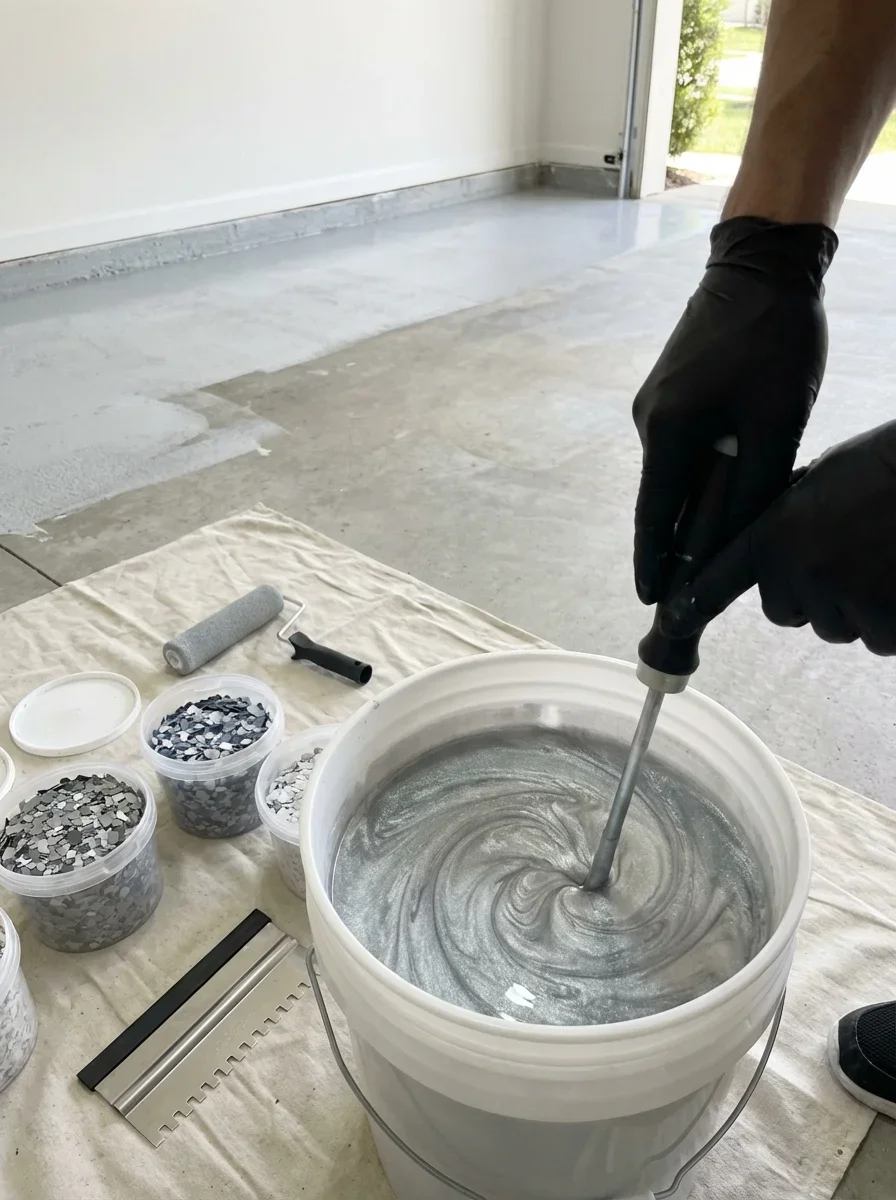
Specialty Floor Coatings — Metallic, Polyurea, Polyaspartic & Flake Systems
Compare specialty garage floor coatings. Learn how metallic epoxy, polyurea, polyaspartic, and flake systems differ and when contractors recommend each type.
Read Guide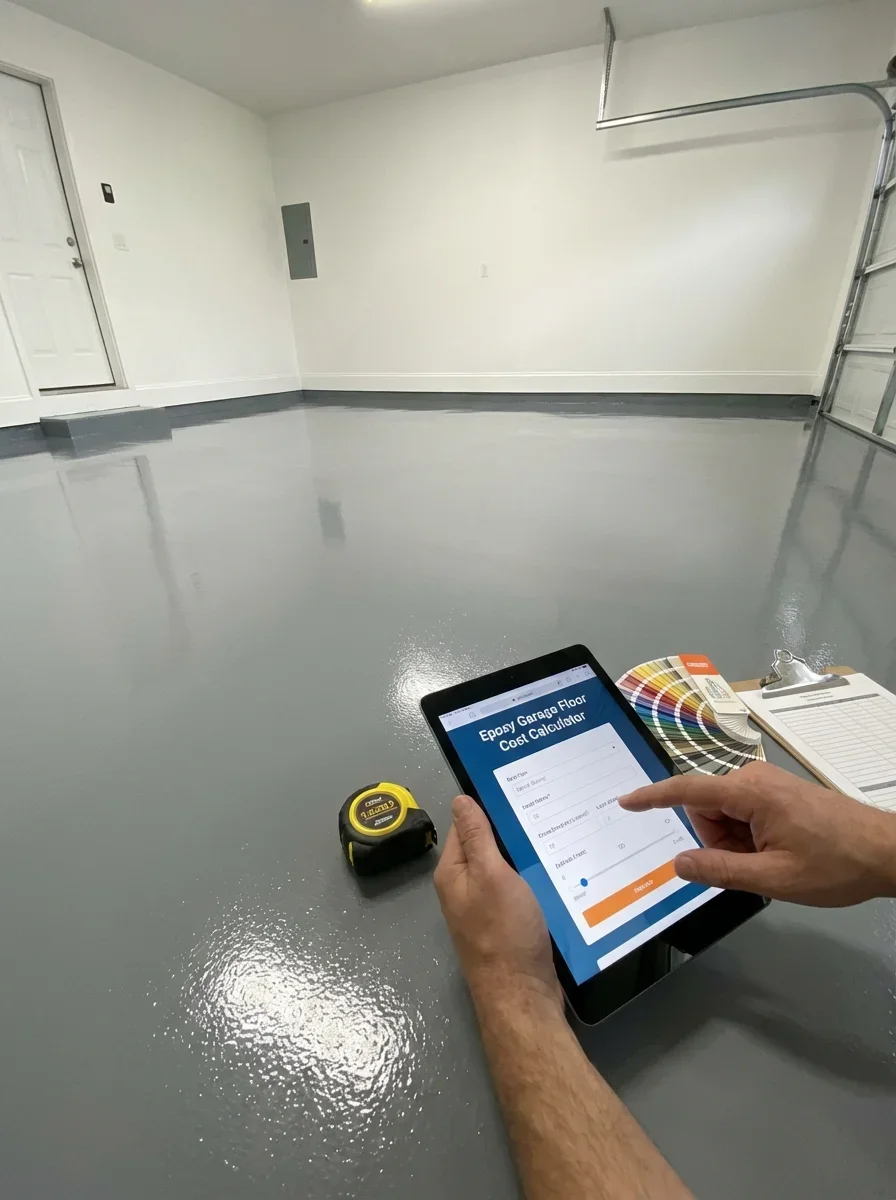
Epoxy Flooring Cost Calculator — Estimate Your Project Before Calling a Pro
Calculate your epoxy garage floor project cost instantly. Input your garage size, coating type, and options to get accurate estimates before calling contractors.
Read Cost Guide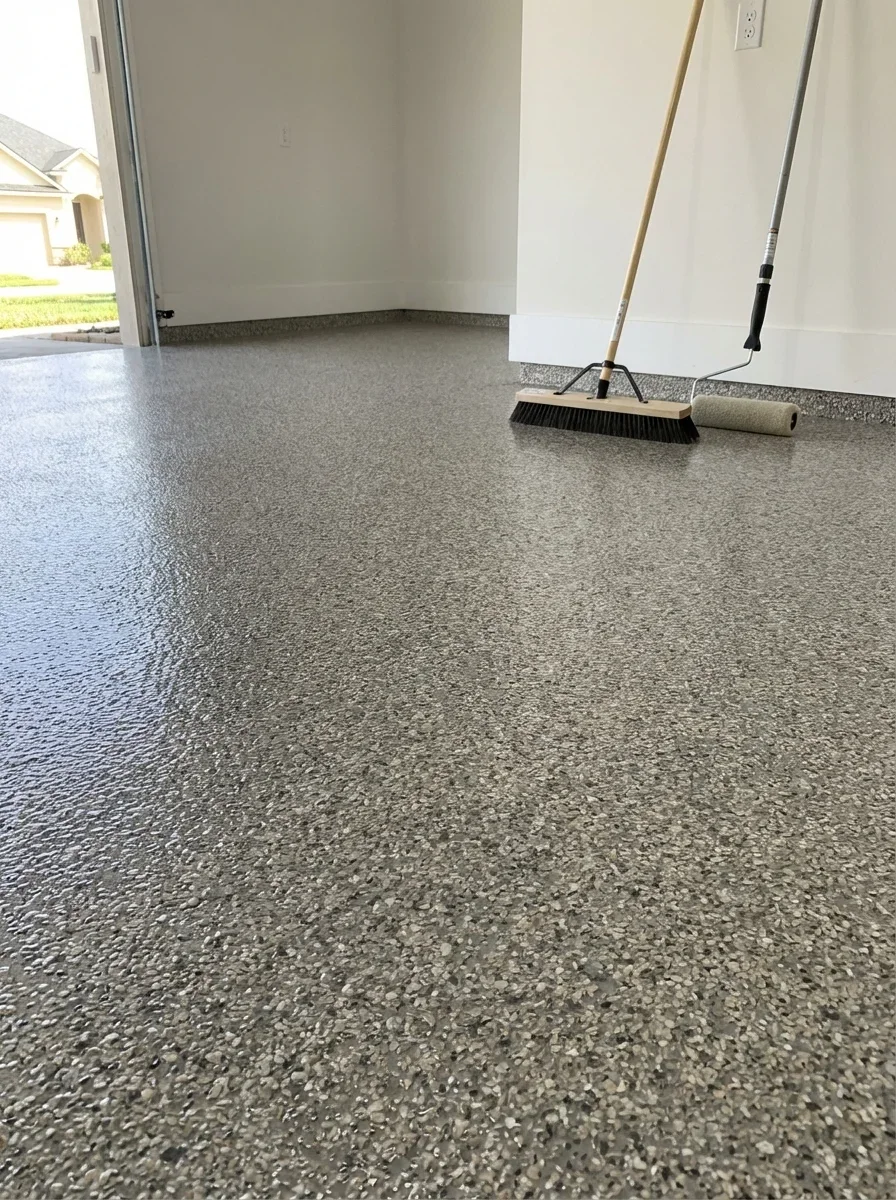
Polyurea Garage Floor Coating — Why Contractors Recommend This Upgrade
Learn why contractors recommend polyurea garage floor coating. Compare polyurea vs epoxy durability, flexibility, cure time, and professional installation requirements.
Read Guide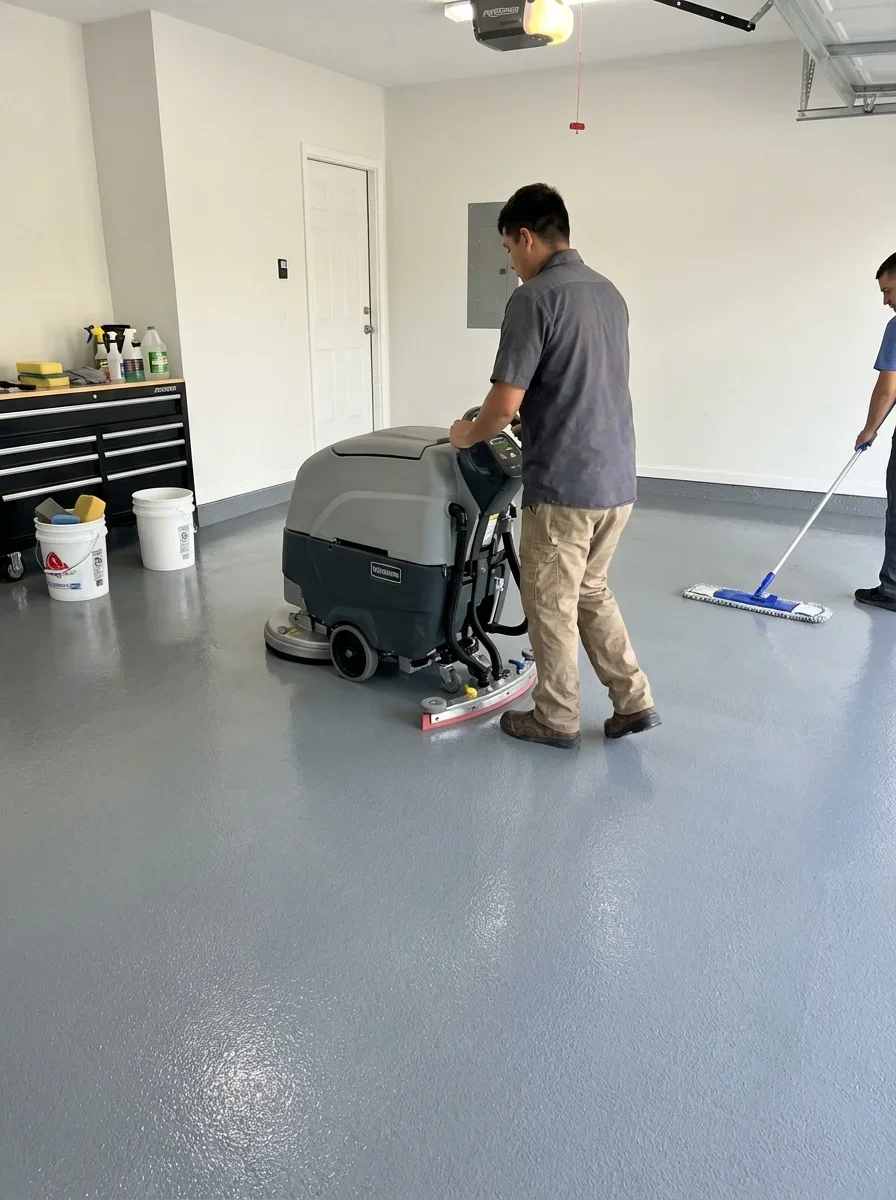
Epoxy Garage Floor Maintenance — How to Clean & Protect Your Investment
Learn what contractors recommend for cleaning and protecting epoxy garage floors. Understand maintenance schedules, proper cleaners, when to reseal, and signs you need professional help.
Read Guide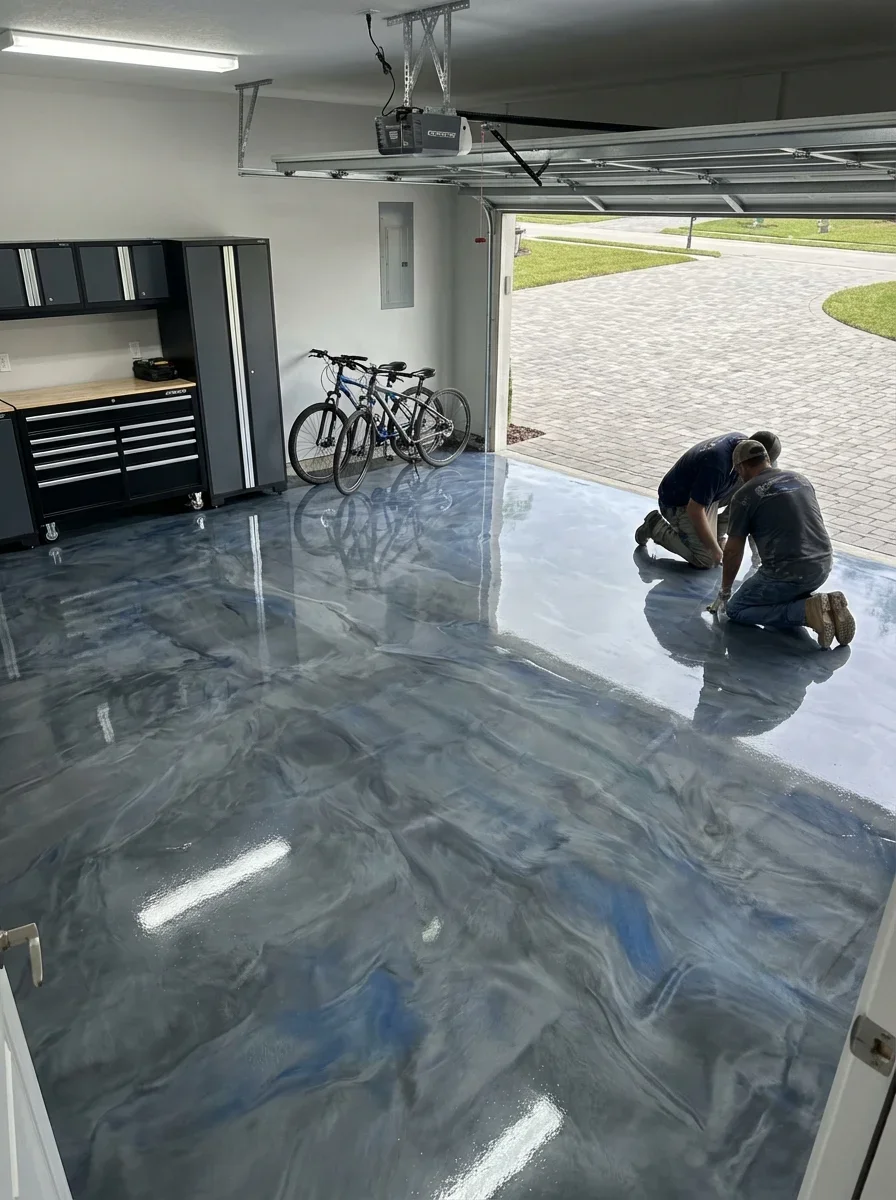
Epoxy Garage Floor Design Trends — What Contractors Are Installing in 2024
Explore current garage floor coating trends from color shifts to metallic finishes. Learn what contractors are installing, why certain looks require professional expertise, and what's popular in Fox Valley.
Read Guide