



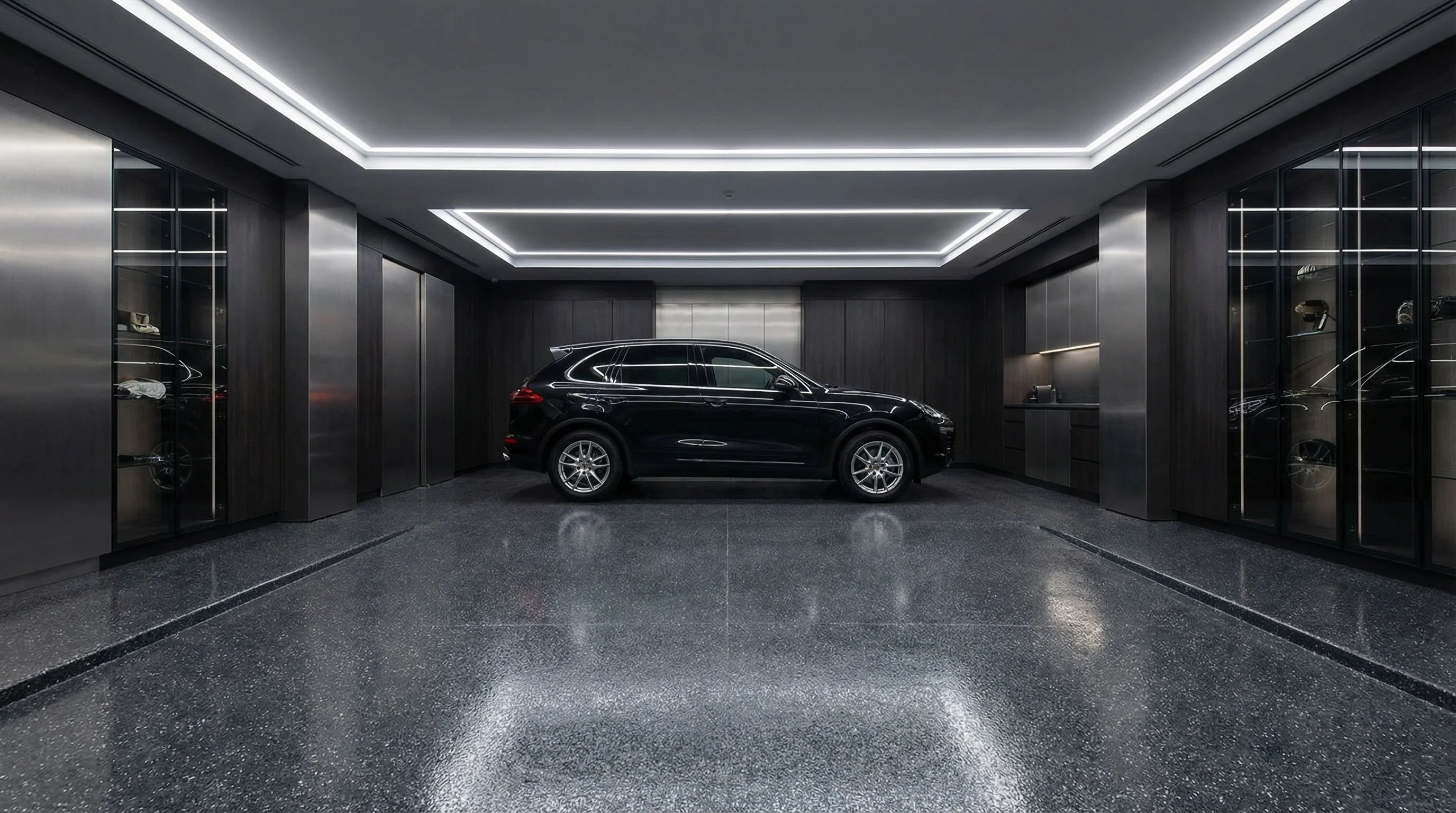
What Is Polyaspartic Coating?
Polyaspartic is the floor coating you choose when time matters and compromise isn't an option. It's a high-performance aliphatic polyurea that cures in hours, not days — which means your garage, shop, or showroom floor goes from bare concrete to traffic-ready in a single day.
That speed isn't a shortcut. It's chemistry.
Traditional epoxy needs 5-7 days to fully cure. You're tiptoeing around it, rescheduling work, losing revenue if it's a commercial space. Polyaspartic hardens in 2-4 hours and handles foot traffic by the next morning. Homeowners in Appleton can park on their garage floor 24 hours after the installer leaves. Business owners in Green Bay don't close for a week.
How Polyaspartic Differs from Epoxy
The differences go beyond speed. Polyaspartic is UV-stable — it won't yellow or chalk when exposed to sunlight. That matters if you have windows in your garage or you're coating an outdoor covered area. Standard epoxy turns amber within a year under UV exposure.
It's also flexible across temperature extremes. Epoxy won't cure properly below 50°F or above 90°F. Polyaspartic works from 0°F to 120°F. In Wisconsin, that means you're not locked into a narrow installation window. Contractors in Oshkosh install polyaspartic in November when epoxy would fail.
The trade-off? Polyaspartic costs 40-60% more than epoxy — and it requires a skilled installer. The product sets so fast that application technique matters. Done right, you get a floor that outlasts epoxy by 8-10 years. Done wrong, you get visible seams and uneven texture.
The ROI is real. A polyaspartic garage floor in Neenah adds $3,000-$5,000 to home value and eliminates re-coating within 10 years. Epoxy typically needs touch-ups or full replacement by year 7.
This isn't a DIY project. The working time is 15-30 minutes before the product starts to gel. You get one shot at application. That's why the installer's experience matters more than the product brand.
What Does Polyaspartic Coating Cost in the Fox Valley?
Expect to pay $7-$12 per square foot for residential installations and $5-$9 per square foot for commercial projects. The range depends on surface condition, color flake density, and topcoat layers.
Residential Garage Pricing
For a typical 400-square-foot two-car garage in Menasha:
| Configuration | Cost Range | What's Included |
|---|---|---|
| Standard (solid color) | $2,800-$3,600 | Base coat, light flake broadcast, clear topcoat |
| Enhanced (full flake) | $3,600-$4,400 | Base coat, full flake coverage, dual topcoats |
| Premium (metallic) | $4,400-$4,800 | Metallic base, decorative flake, dual UV topcoats |
Surface prep adds $400-$800 if you have existing coatings to remove or concrete repairs needed. Most Fox Valley homes built after 2000 need minimal prep.
Commercial Space Pricing
Commercial installations drop to $5-$9/sqft because of scale, but the per-square-foot cost rises with performance requirements. A 2,000-square-foot auto shop in Kaukauna might pay $10,000-$14,000 for a chemical-resistant system rated for hot tires and oil exposure.
High-traffic retail spaces often choose thicker broadcast layers for slip resistance — that adds $1-$2/sqft but prevents liability issues and extends floor life.
Cost vs Value: Why Polyaspartic Costs More
Here's what you're actually paying for:
| Standard Epoxy | Polyaspartic | |
|---|---|---|
| Material cost/sqft | $0.50-$1.00 | $1.50-$2.50 |
| Installation time | 6-8 hours + 5-7 day cure | 4-6 hours + 24 hour cure |
| Downtime cost (commercial) | 5-7 days lost revenue | 1 day |
| Expected lifespan | 5-7 years | 15+ years |
| UV resistance | Yellows in 1-2 years | Permanent clarity |
| Re-coat frequency | Every 5-7 years | Every 15+ years |
The break-even comes at year 8. If you're coating a garage you'll own for 10+ years or a commercial space where downtime costs thousands per day, polyaspartic pays for itself.
DIY polyaspartic kits exist but aren't recommended. The product costs $600-$900 for a two-car garage, but most homeowners either rush the application (leaving texture marks) or run out of working time (creating visible seams). Professional results require spray equipment and experience that takes years to develop.
The 1-Day Polyaspartic Installation Process
The entire installation happens in one visit. Prep in the morning, coating by afternoon, traffic-ready the next day.
Day 1: Surface Prep and Application
Hour 1-3: Surface preparation. The crew diamond-grinds the concrete to open the pores and remove any sealers or contaminants. This creates the mechanical bond that keeps the coating from delaminating. They vacuum everything twice — polyaspartic won't adhere to dust.
If there are cracks wider than ⅛", they get routed and filled with flexible epoxy. Oil stains get treated with degreasers and sometimes a second grind pass. The concrete moisture level gets tested — anything above 4% means the job gets rescheduled.
Hour 3-4: Prime coat (if needed). Some concrete in older Appleton homes is porous enough to need a primer. That adds 30-45 minutes but prevents the base coat from soaking in unevenly.
Hour 4-5: Base coat and flake broadcast. The polyaspartic base goes down in sections using squeegees and rollers. Within minutes, decorative flakes get broadcast into the wet coating — light scatter or full coverage depending on your choice. The crew works fast because they have 15-20 minutes of open time before the product gels.
Hour 5-6: Topcoat application. After 2-3 hours, the base is tack-free. The crew scrapes excess flakes, vacuums, and applies the clear topcoat. This seals the flakes and provides the UV protection and chemical resistance. High-traffic commercial jobs get a second topcoat for added thickness.
Cure Timeline and Traffic Readiness
- 4-6 hours: Hard to the touch, safe to walk on for light cleanup
- 12-18 hours: Foot traffic okay, no heavy objects
- 24 hours: Vehicle traffic, normal use resumes
- 7 days: Full chemical resistance and hardness achieved
The 24-hour cure time assumes temps above 50°F. Cold garages in January might need 36 hours. Contractors in Green Bay sometimes bring portable heaters if installing in unheated spaces during winter.
You'll smell a slight chemical odor during application — keep garage doors open and run a fan. The smell dissipates within 2-3 hours as the coating cures.
Polyaspartic vs Epoxy: Which Is Right for Your Project?
The answer depends on timeline, budget, and environment. Here's the honest comparison:
Performance Comparison Table
| Factor | Standard Epoxy | Polyaspartic |
|---|---|---|
| Installation time | 1 day + 5-7 day cure | 1 day + 24 hour cure |
| Application temp range | 50-90°F | 0-120°F |
| UV resistance | Yellows outdoors | Permanent clarity |
| Abrasion resistance | Good | Excellent |
| Chemical resistance | Good | Excellent |
| Lifespan | 5-7 years | 15+ years |
| Cost | $3-$6/sqft | $7-$12/sqft |
| DIY-friendly | Yes (with prep) | No (requires experience) |
When to Choose Polyaspartic
Choose polyaspartic if any of these apply:
- You need the space back immediately. Commercial kitchens, retail floors, rental properties between tenants — anywhere downtime costs money.
- The space gets sunlight. Garages with windows, covered patios, service bays with overhead doors that stay open. Epoxy will yellow. Polyaspartic won't.
- You're installing outside the 60-80°F sweet spot. Wisconsin spring and fall projects often hit 40°F mornings or 95°F afternoons. Polyaspartic handles both.
- You want this to be the last floor you install. 15-year performance means you're not dealing with this again. For homeowners aging in place or business owners planning long-term, that matters.
- You're coating a high-value space. Showrooms, high-end garages, commercial lobbies — places where the finish quality and longevity justify premium cost.
Choose standard epoxy if you're on a tight budget, have a full week to keep the space empty, and aren't concerned about UV exposure. It's still a solid coating for basement floors, interior workshops, and spaces that don't see extreme temps.
Frequently Asked Questions
The primary downside of polyaspartic coating is the presence of isocyanates, a chemical compound that can pose health risks during application and cure. Isocyanates may cause respiratory irritation, asthma symptoms, and skin sensitivity in sensitive individuals.
Main drawbacks:
- Chemical hazards — isocyanate exposure requires proper ventilation and PPE during installation
- Health risks — can trigger respiratory issues, especially in people with asthma or allergies
- Higher cost — more expensive than epoxy or polyurea
- Professional installation required — DIY application not recommended due to chemical handling
- Fume sensitivity — some homeowners report odor and off-gassing during cure (typically 24–48 hours)
- Moisture sensitivity — must be applied in dry conditions; humidity can affect curing
Related Articles
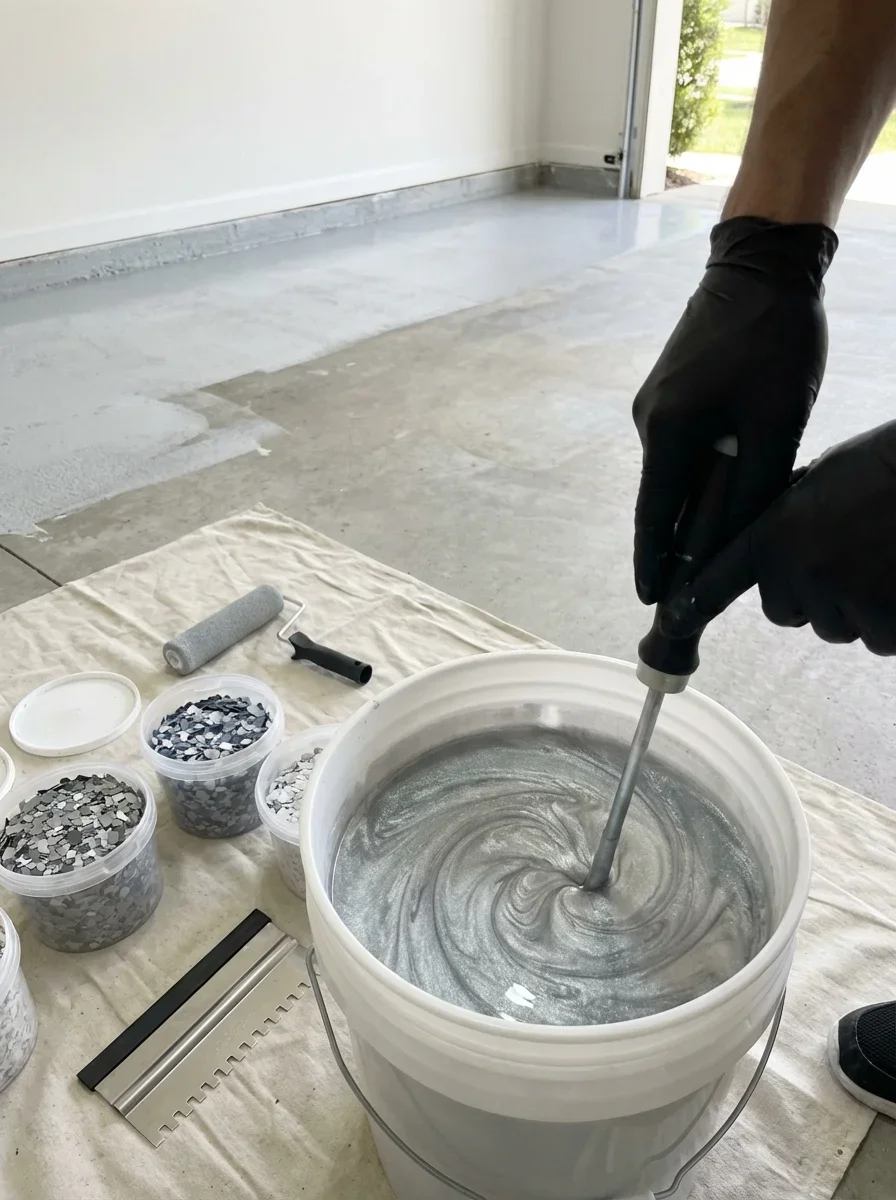
Specialty Floor Coatings — Metallic, Polyurea, Polyaspartic & Flake Systems
Compare specialty garage floor coatings. Learn how metallic epoxy, polyurea, polyaspartic, and flake systems differ and when contractors recommend each type.
Read Guide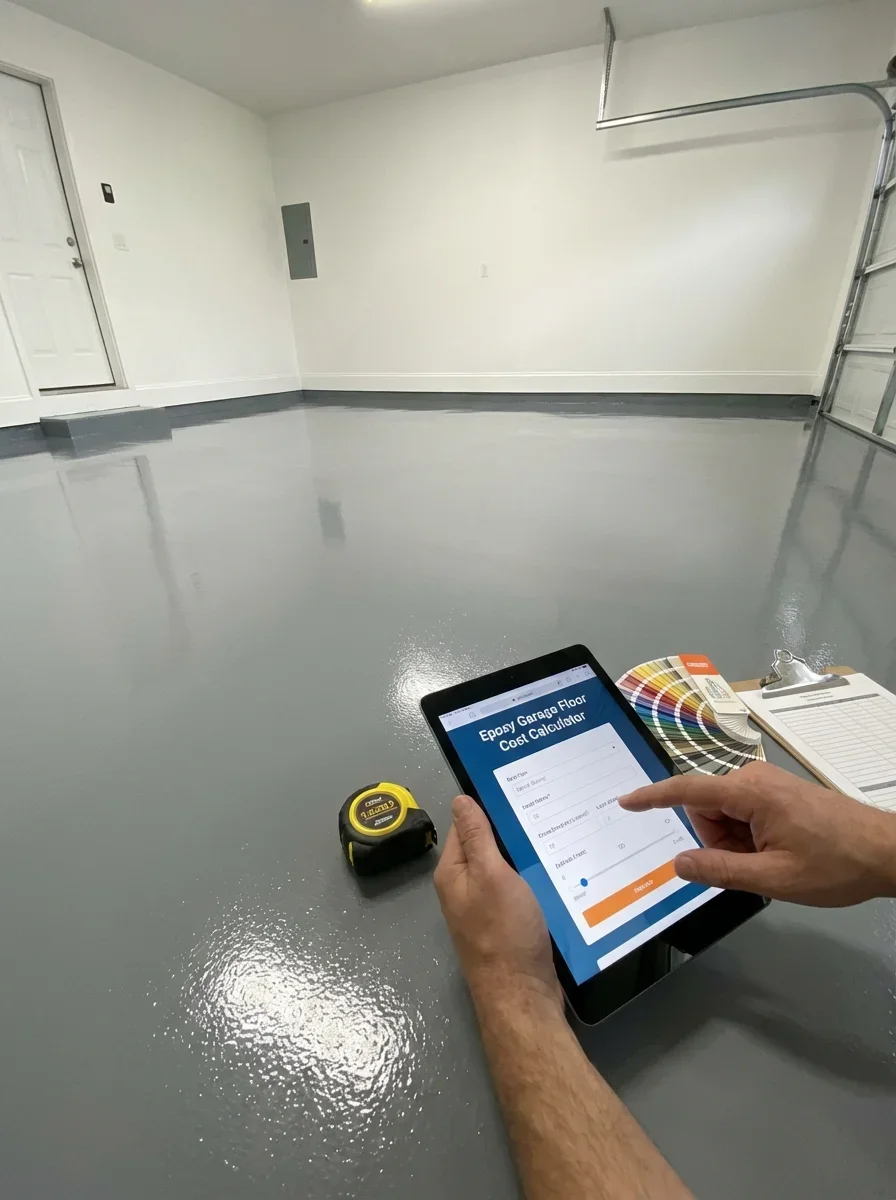
Epoxy Flooring Cost Calculator — Estimate Your Project Before Calling a Pro
Calculate your epoxy garage floor project cost instantly. Input your garage size, coating type, and options to get accurate estimates before calling contractors.
Read Cost Guide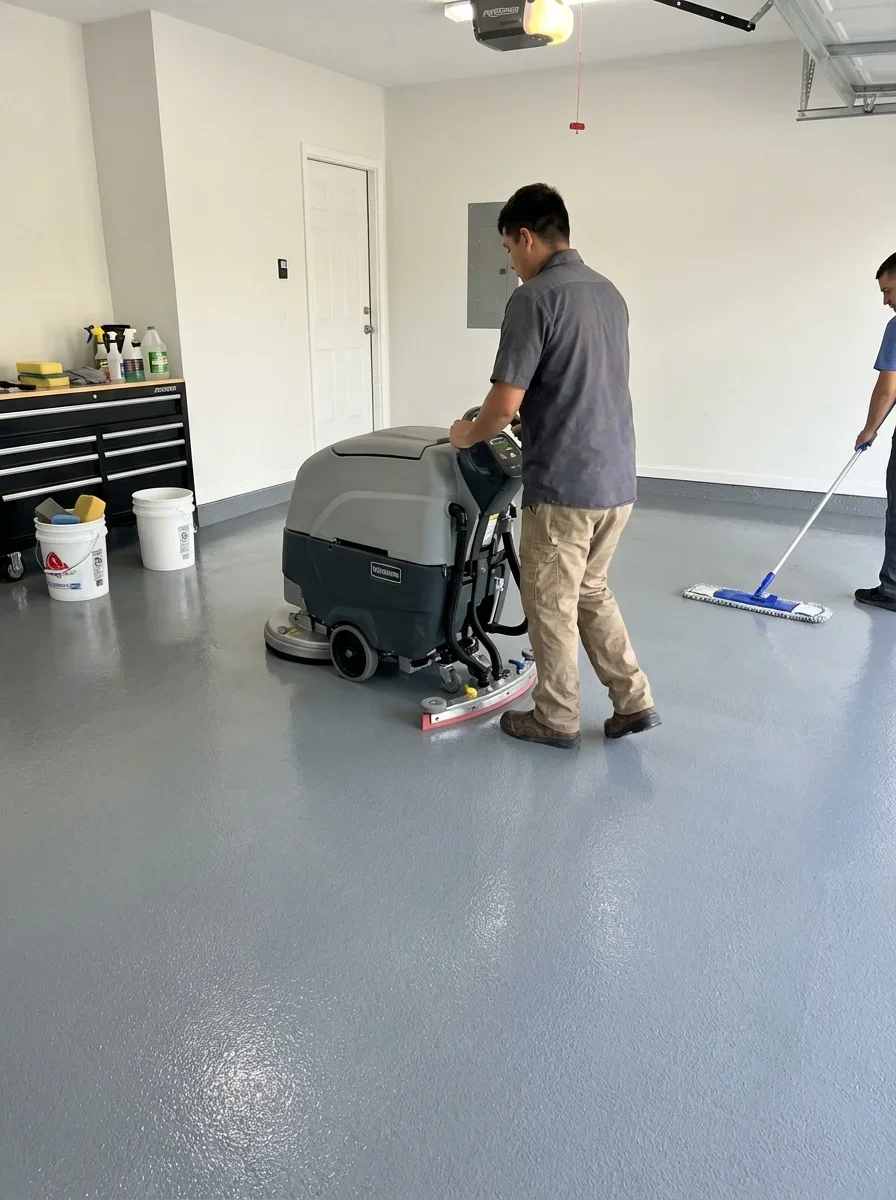
Epoxy Garage Floor Maintenance — How to Clean & Protect Your Investment
Learn what contractors recommend for cleaning and protecting epoxy garage floors. Understand maintenance schedules, proper cleaners, when to reseal, and signs you need professional help.
Read Guide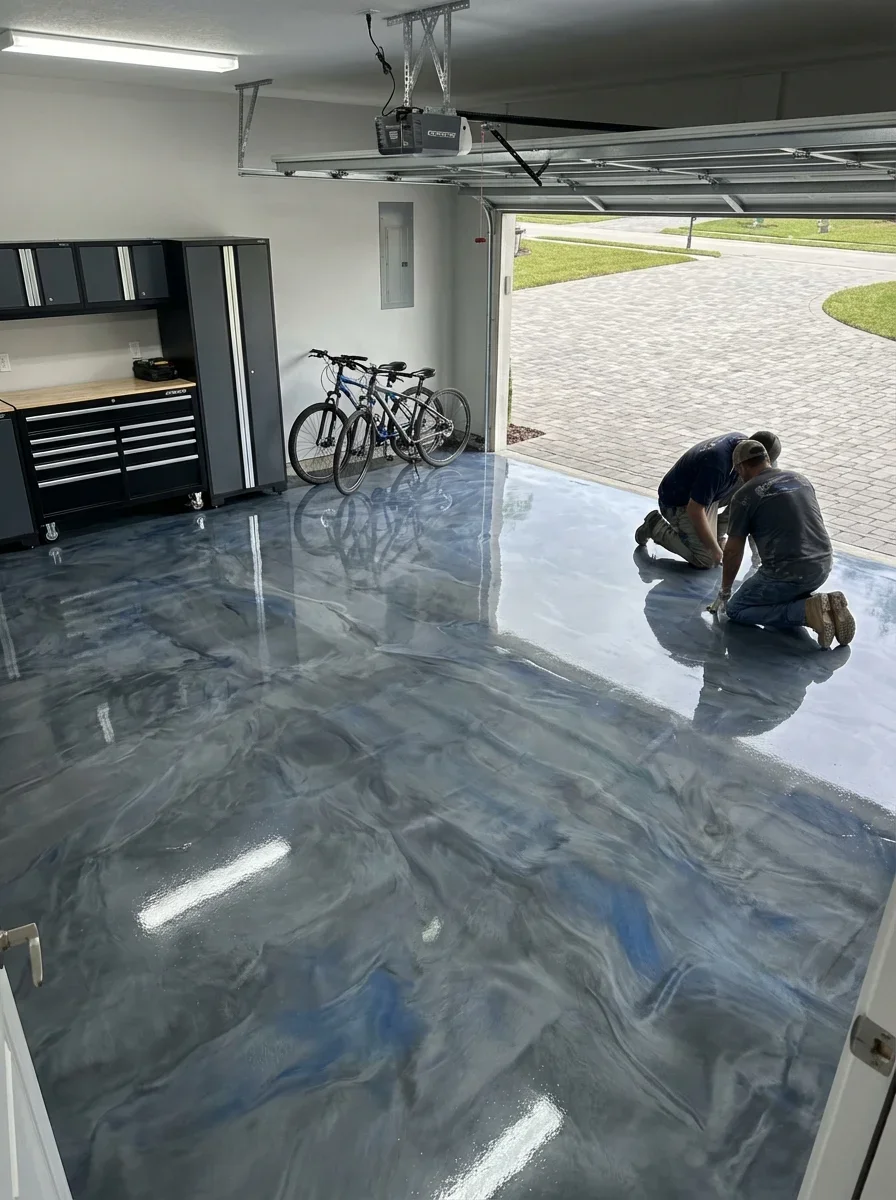
Epoxy Garage Floor Design Trends — What Contractors Are Installing in 2024
Explore current garage floor coating trends from color shifts to metallic finishes. Learn what contractors are installing, why certain looks require professional expertise, and what's popular in Fox Valley.
Read Guide