




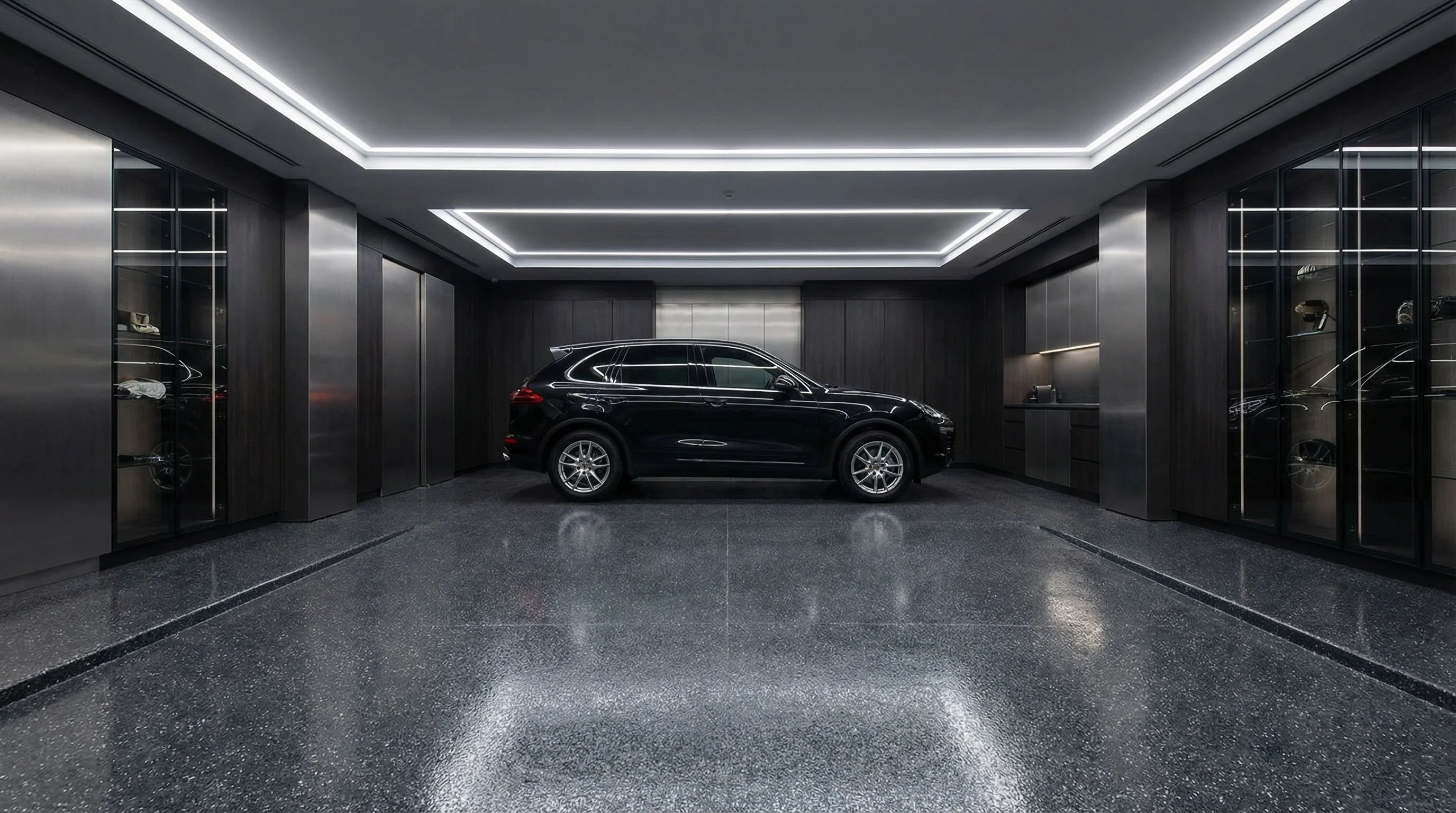
Why Basement Floors in Fox Valley Homes Need Special Treatment
Wisconsin basements face moisture challenges that homes in drier climates don't deal with. Your basement sits below the water table for much of the year. Groundwater pressure pushes moisture vapor through concrete slabs constantly, even if you never see standing water.
That white powdery stuff on your concrete? That's efflorescence — mineral deposits left behind when moisture evaporates through the slab. It's not just cosmetic. It's proof that water vapor is moving through your floor right now.
Painting won't work. Store-bought concrete paint might look fine for six months. Then it starts peeling in sheets because it traps moisture underneath. You've seen those basements — flaking gray paint that looks worse than bare concrete.
The humidity makes everything harder. Appleton basements average 60-70% relative humidity in summer. Green Bay stays damp through spring and fall. That moisture doesn't just come from the air — it's rising through your slab from below.
Sound familiar? Your basement floor is always slightly cool to the touch. You see damp spots after heavy rain. The concrete is dusty no matter how often you sweep. You want to finish the space, but you're worried about moisture problems.
Coating a basement floor without proper moisture testing is gambling. If you trap water vapor under the wrong coating system, it'll fail within a year. Then you're grinding it all off and starting over — which costs twice as much as doing it right the first time.
The right coating system doesn't just look better. It handles moisture vapor transmission. It creates a barrier that lets your basement stay dry and usable even during spring thaw or heavy summer storms. Homeowners in Neenah and Menasha who coat their basement floors properly add 400-800 square feet of genuinely usable space to their homes.
What Does Basement Floor Coating Cost in the Fox Valley?
Expect to pay $3-$8 per square foot for professional basement floor coating in the Appleton and Green Bay area. That's $1,200-$3,200 for a typical 400-square-foot basement, or $2,400-$6,400 for an 800-square-foot space.
Why such a wide range? Moisture conditions determine your real cost.
Material and System Options
| Coating Type | Cost/Sq Ft | Moisture Tolerance | Lifespan | Best For |
|---|---|---|---|---|
| Painted Concrete | $1-$2 | Very Low | 1-2 years | Dry basements only |
| Standard Epoxy | $3-$5 | Low-Moderate | 5-10 years | Climate-controlled basements |
| Moisture-Mitigating Epoxy | $5-$7 | Moderate-High | 10-15 years | Most Fox Valley basements |
| Polyaspartic System | $6-$8 | High | 15-20 years | High-moisture basements |
A basic epoxy coating on well-prepared concrete with minimal moisture issues runs $3-$4 per square foot in Oshkosh and Kaukauna. That includes crack filling, light grinding, primer, and two coats of epoxy.
Moisture remediation changes everything. If calcium chloride testing shows moisture vapor transmission above 3 pounds per 1,000 square feet per 24 hours, you need a moisture-mitigating primer. Add $1-$2 per square foot. Heavy efflorescence requires acid etching or deeper grinding. Add another $0.50-$1 per square foot.
Moisture Remediation Factors
Here's what drives costs up in Wisconsin basements:
- Moisture vapor barrier primer: $200-$600 for a typical basement
- Crack repair and epoxy injection: $150-$400 depending on severity
- Efflorescence removal and acid washing: $100-$300
- Diamond grinding for proper profile: $0.75-$1.50/sq ft (needed when concrete is too smooth or contaminated)
- Dehumidification during cure: $100-$200 rental if basement RH is above 60%
A contractor who quotes $3 per square foot without testing for moisture is either planning to use cheap paint that'll fail, or doesn't understand Wisconsin basement conditions. Either way, you'll be recoating within two years.
Good contractors include moisture testing in their quote. They'll do calcium chloride tests and relative humidity probe tests before specifying which coating system your basement needs. That testing costs $150-$300, but it prevents a $3,000 mistake.
Polyaspartic systems cost more upfront but handle higher moisture levels than epoxy. They cure faster, too — you can walk on them in 4-6 hours instead of 24-48 hours with epoxy. For basements in Green Bay's flood-prone areas, that moisture tolerance is worth the extra $800-$1,200 for a typical basement.
The Basement Floor Coating Process
Professional basement floor coating takes 2-4 days depending on moisture conditions and coating system. Here's what actually happens.
Moisture Testing and Assessment
First step: figure out if your basement can even handle coating right now. A qualified contractor will run two tests.
Calcium chloride testing measures how much moisture vapor is moving through your slab over 72 hours. They tape a small dish of calcium chloride to the floor, seal it, and weigh the dish before and after. Anything above 3 pounds per 1,000 square feet per 24 hours means you need moisture-mitigating products.
Relative humidity testing uses probes inserted into small holes drilled in the slab. It measures moisture inside the concrete itself. This is more accurate for predicting long-term coating performance. Above 75% RH, standard epoxy won't bond properly.
These tests run simultaneously while you get your quote. If your basement tests high for moisture, the contractor will spec a moisture-vapor-tolerant system instead of basic epoxy.
Surface Preparation
This is where contractors separate themselves. Poor prep means coating failure within a year, even with premium products.
Crack and joint repair: Epoxy injection for structural cracks, flexible filling for control joints. This prevents cracks from telegraphing through the coating.
Efflorescence and contamination removal: Acid washing or wire brushing to remove mineral deposits, oil stains, or old paint residue. The coating needs to bond to clean concrete, not surface contamination.
Diamond grinding: Creating the right surface profile — essentially roughening the concrete so the primer can mechanically bond. This generates a lot of dust, so contractors use equipment with HEPA vacuum attachments. Expect this to take 4-8 hours for a typical Appleton basement.
Cleaning and drying: Multiple passes with industrial vacuums, then tack cloths to remove all dust. Any debris left behind creates weak spots in the coating.
Prep work typically takes one full day. If your basement has significant moisture issues, contractors may run a commercial dehumidifier overnight before coating.
Coating Application
Application happens in layers over 1-3 days depending on the system.
Day 1 (or Day 2 after prep): Moisture-mitigating primer goes down first if needed. This creates a vapor barrier that handles moisture transmission. It needs 8-12 hours to cure before the base coat.
Day 2: Base coat application — either epoxy or polyaspartic depending on your moisture conditions and budget. This goes on with rollers and squeegees in 4-6 mil thickness. If you want color flakes broadcast into the coating for texture and appearance, they go into the wet base coat. Most Neenah homeowners choose partial flake coverage (30-50%) for a cleaner look than full broadcast.
Day 3: Clear topcoat seals everything and provides the wear surface. Two coats are standard for basement floors. Polyaspartic topcoats cure in 4-6 hours. Epoxy needs 24-48 hours before foot traffic.
Temperature and humidity matter enormously. Contractors in Menasha and Kaukauna often schedule basement coatings in winter when they can control basement conditions easily. Summer humidity above 60% slows cure times and can cause coating defects.
How to Choose a Basement Floor Coating Contractor
Finding a contractor who understands Wisconsin basement moisture conditions is more important than finding the cheapest quote.
Moisture Management Experience
Ask these specific questions when comparing contractors:
"Do you perform moisture testing before quoting, or before application?" The right answer is before quoting. Testing determines which coating system your basement needs, which affects price.
"What moisture vapor transmission rate can your standard system handle?" If they don't know, or if they say "we've never had a problem," they're not testing. Standard epoxy fails above 3-5 pounds MVER. Moisture-mitigating systems handle 8-15 pounds.
"Have you coated basements in [your city]?" Local experience matters. Green Bay basements near the Fox River have different moisture profiles than Oshkosh homes on higher ground. A contractor who's worked in your area knows what to expect.
Red Flags to Avoid
They quote without seeing the basement. Every basement has different moisture conditions, crack patterns, and existing contamination. Phone quotes are meaningless.
They don't mention moisture testing. This is the biggest predictor of coating failure. Any contractor who skips testing is gambling with your money.
The quote is dramatically lower than others. Budget contractors use single-coat latex paint products marketed as "epoxy paint." These fail fast in below-grade applications. Real epoxy or polyaspartic systems cost more because they actually work.
They pressure you to decide immediately. Quality contractors are booked 3-6 weeks out. Urgent pressure means they're slow for a reason.
Warranty and System Quality
Expect a 3-5 year warranty on epoxy systems in basements, 5-10 years on moisture-mitigating or polyaspartic systems. The warranty should cover delamination and peeling — not just wear from traffic.
Ask what products they're using by name. You want 100% solids epoxy (not water-based "epoxy paint") or polyaspartic topcoats. Established brands like Spartacote, Dur-A-Flex, or Stonhard indicate they're using professional-grade materials.
References matter in basement work. Ask for three customers they coated 3+ years ago. Call them and ask specifically about moisture issues or coating failure. A contractor confident in their moisture mitigation won't hesitate to provide long-term references.
The directory listings on this site include contractors who've submitted proof of licensing, insurance, and project portfolios. When you're comparing quotes for your Appleton or Green Bay basement, you're looking for someone who treats moisture testing as mandatory, explains coating options based on your specific test results, and warranties their work for at least 3-5 years. That's the difference between a basement floor that lasts 15 years and one that fails within two.
Frequently Asked Questions
While epoxy is durable and attractive, it has several notable drawbacks:
- High Initial Cost — $9–$15 per sq ft ($2,800+ for small garages) is a significant upfront investment
- Slippery When Wet — High-gloss finishes become slippery in wet conditions unless anti-slip additives are applied
- Surface Preparation is Critical — Concrete must be thoroughly cleaned, degreased, and repaired; poor prep leads to premature failure and peeling
- Moisture Sensitivity — Epoxy fails if moisture vapor escapes through concrete; requires moisture testing and mitigation before application
- Not Forgiving to Mistakes — Professional installation is essential; DIY errors are costly and difficult to repair
- Long Curing Time — Floors are unusable for 3–7 days during cure; heavy traffic too early can damage the coating
- Potential for Peeling — If prep is inadequate or moisture is present, epoxy can peel in patches—costly to repair
- Limited Repairability — Spot repairs are visible and difficult to match; re-coating large areas may be necessary
- Traffic Wear Patterns — High-traffic areas may show wear or dullness within 5–10 years
These issues are largely preventable with proper installation, moisture testing, and maintenance—which is why hiring a Type A specialist contractor is critical.
Related Articles
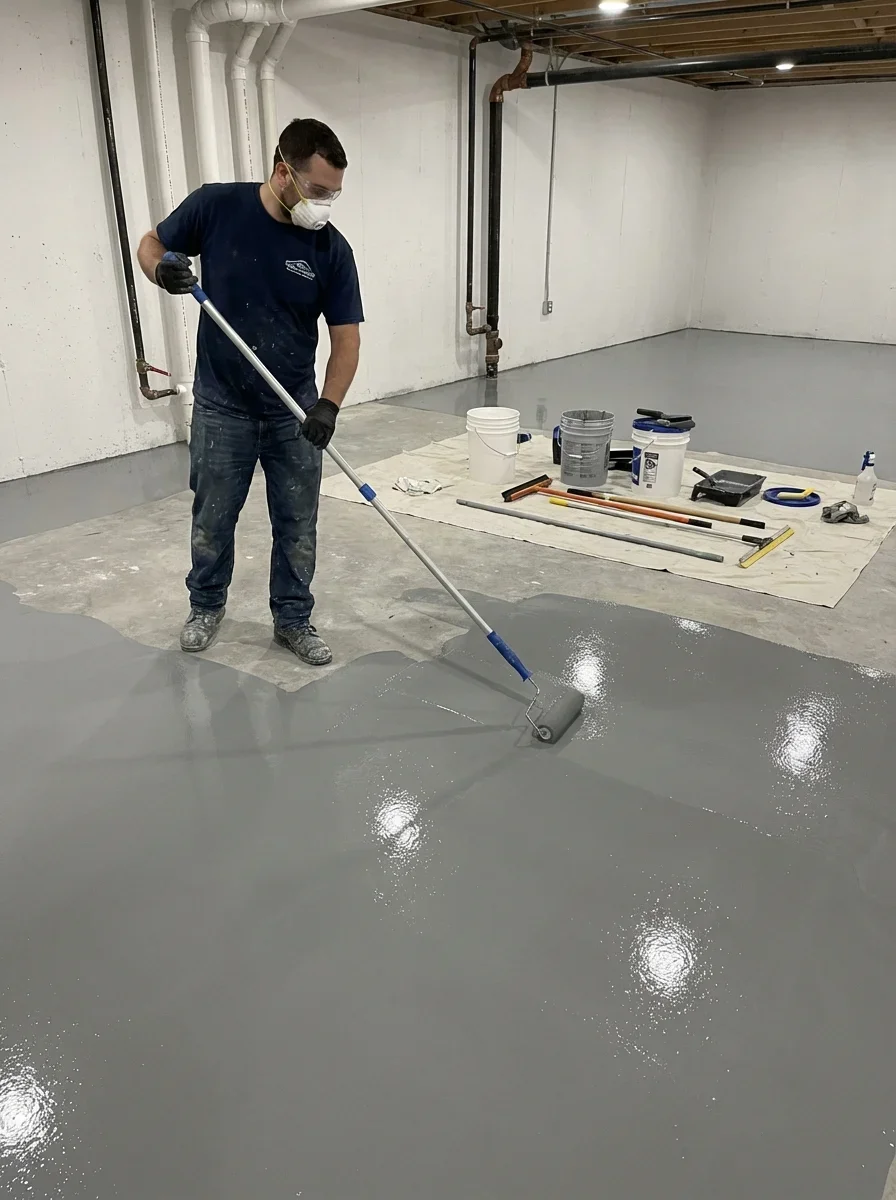
Additional Floor Services — Basements, Commercial & Concrete Polishing
Professional floor coating for basements, commercial spaces, and polished concrete. Find qualified contractors for specialized applications in Fox Valley.
Read Guide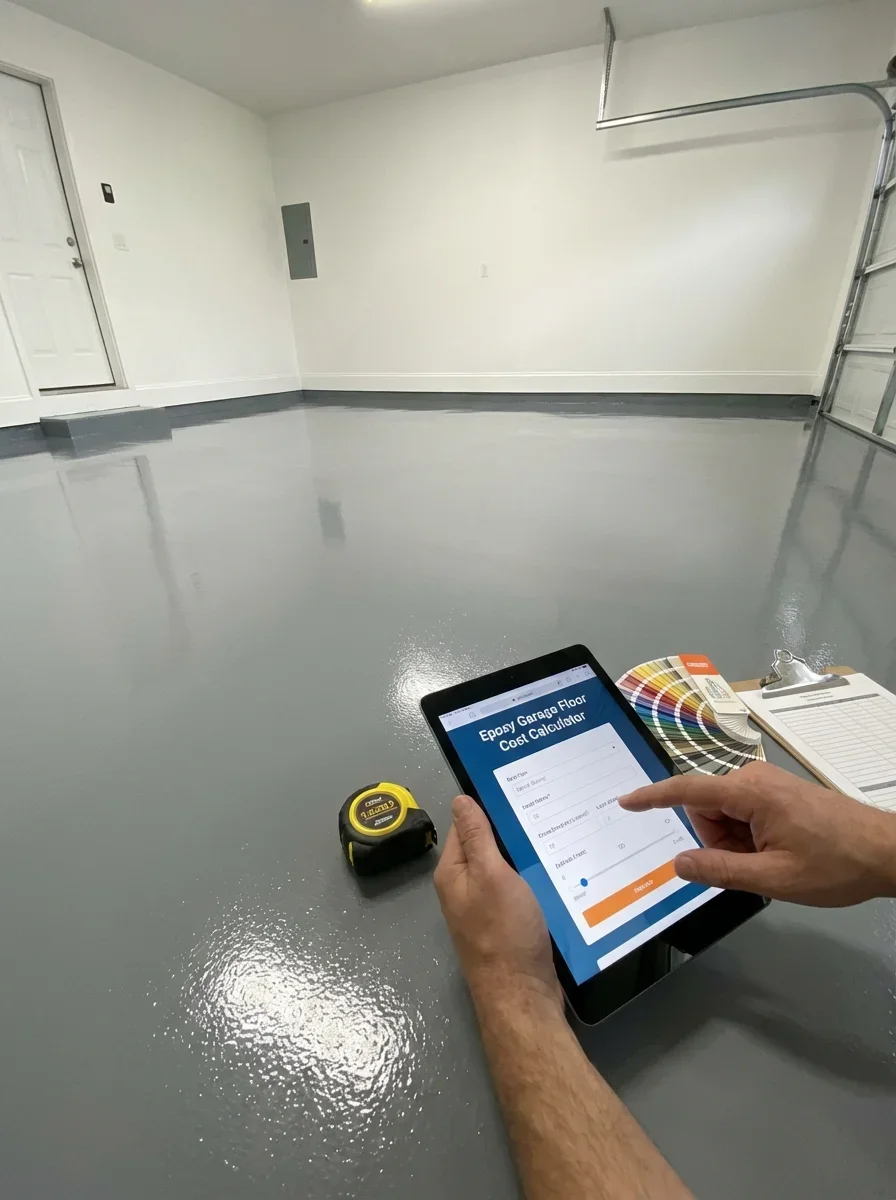
Epoxy Flooring Cost Calculator — Estimate Your Project Before Calling a Pro
Calculate your epoxy garage floor project cost instantly. Input your garage size, coating type, and options to get accurate estimates before calling contractors.
Read Cost Guide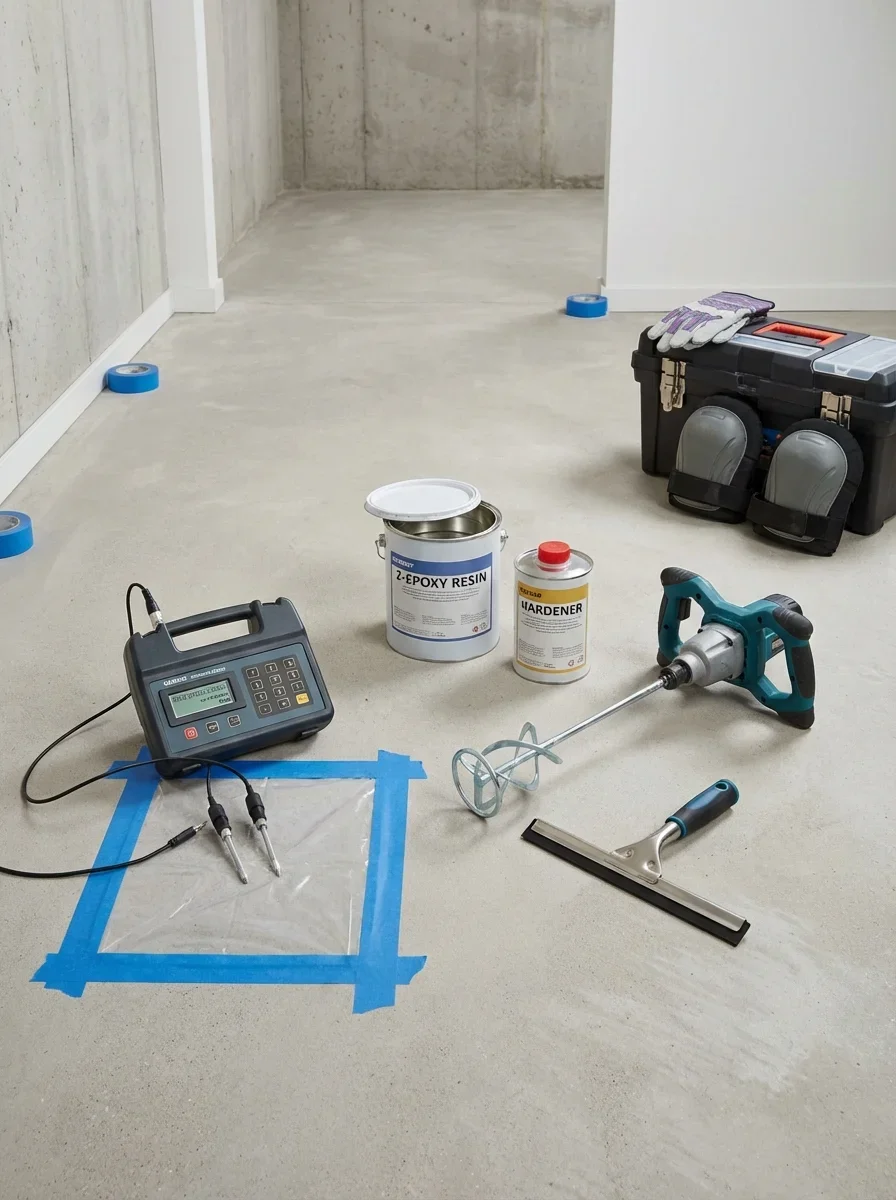
Basement Floor Coating Services — Waterproofing & Finishing Options
Professional basement floor coating options including moisture barriers, epoxy systems, and finishing solutions. Compare qualified contractors in Fox Valley.
Read Guide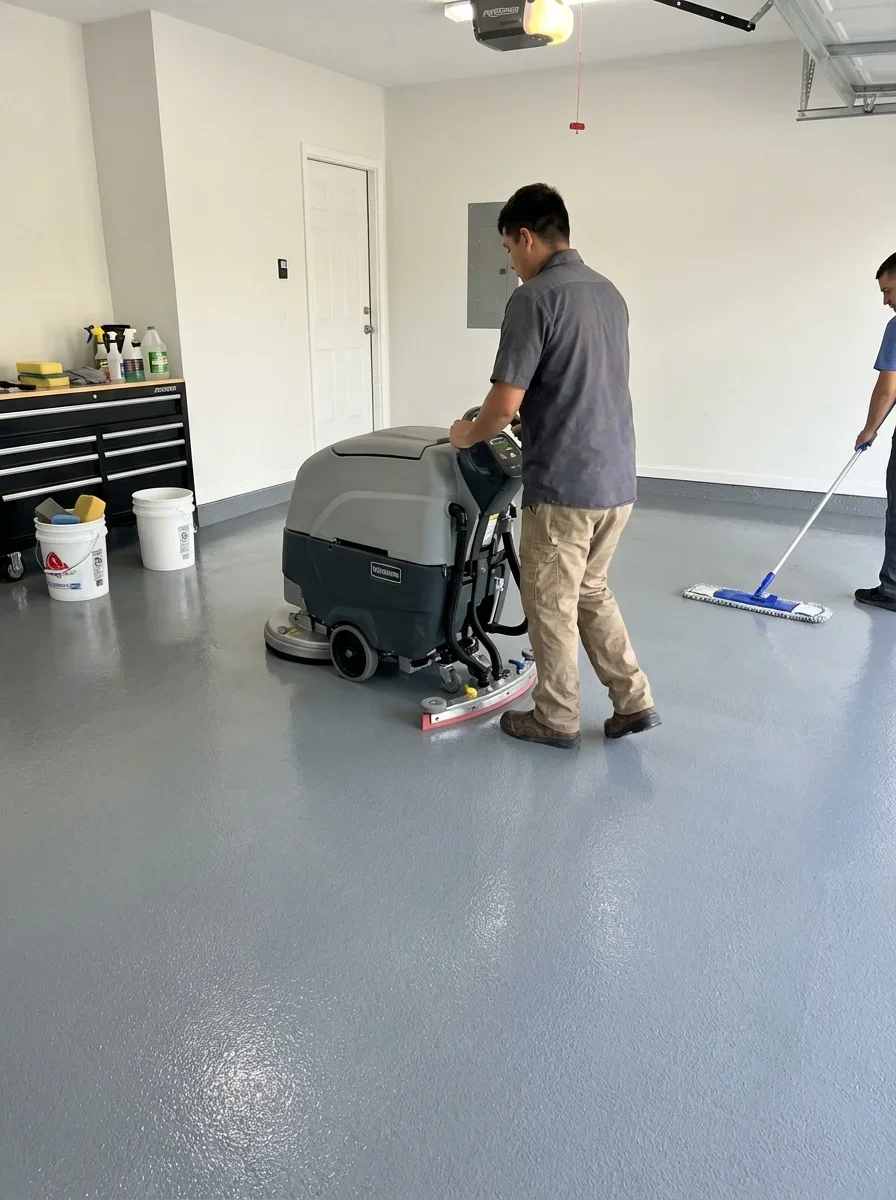
Epoxy Garage Floor Maintenance — How to Clean & Protect Your Investment
Learn what contractors recommend for cleaning and protecting epoxy garage floors. Understand maintenance schedules, proper cleaners, when to reseal, and signs you need professional help.
Read Guide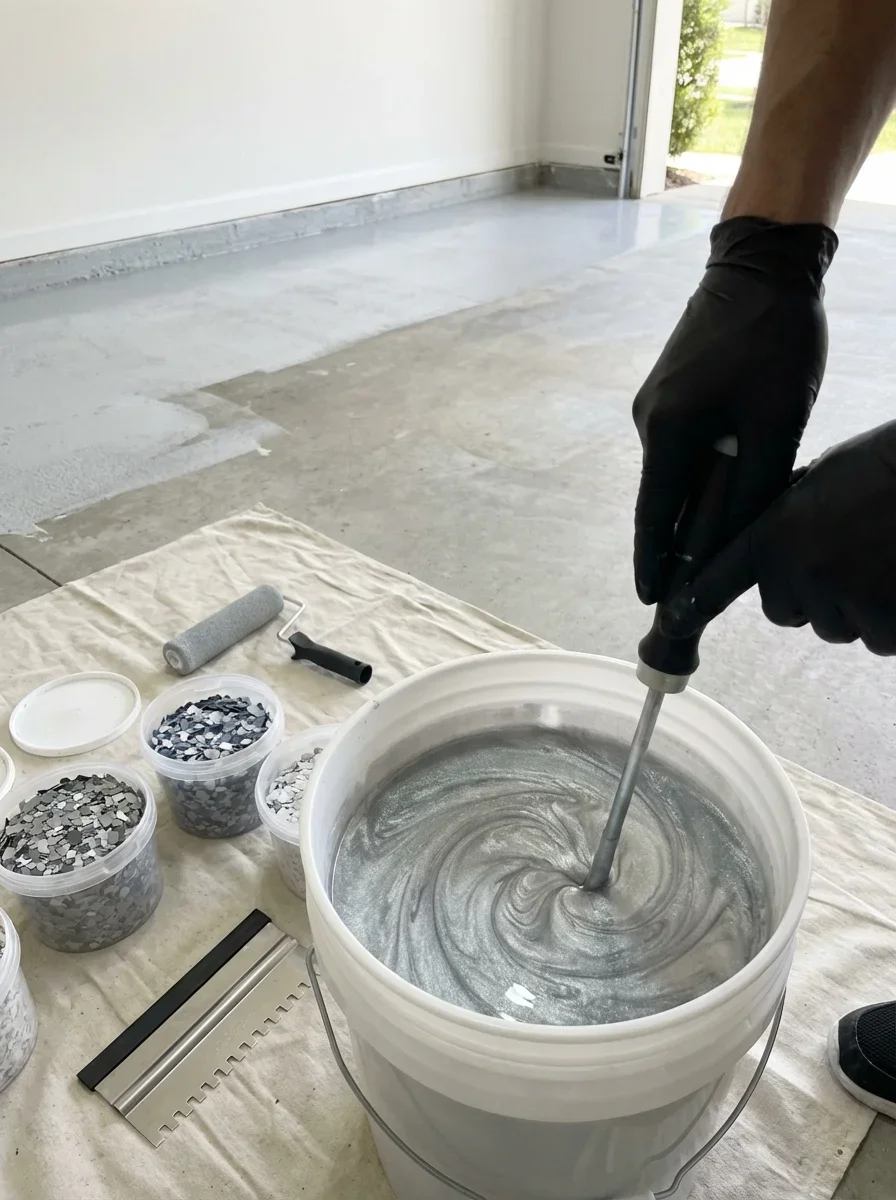
Specialty Floor Coatings — Metallic, Polyurea, Polyaspartic & Flake Systems
Compare specialty garage floor coatings. Learn how metallic epoxy, polyurea, polyaspartic, and flake systems differ and when contractors recommend each type.
Read Guide